
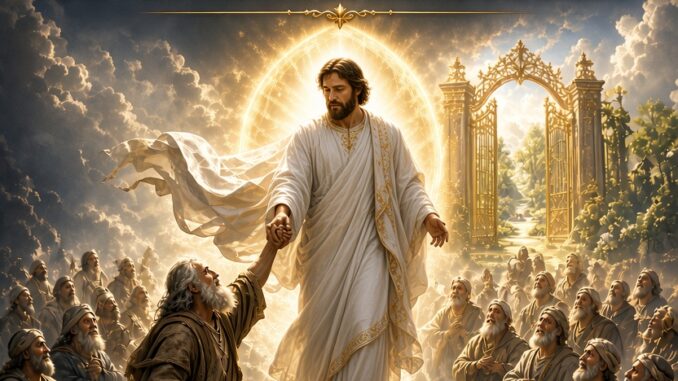
After Jesus cried out “It is finished” on the cross and committed His spirit to the Father, His body was laid in the tomb. But His soul did not remain inactive. According to Scripture, for three days and three nights He entered the realm of the dead—Hades in Greek, Sheol in Hebrew—to accomplish a triumphant work of liberation. He did not go there to suffer further punishment for our sins. The full price of sin was paid on the cross. Instead, He went to set free those who had been waiting in hope.
Jesus Entered the Heart of the Earth
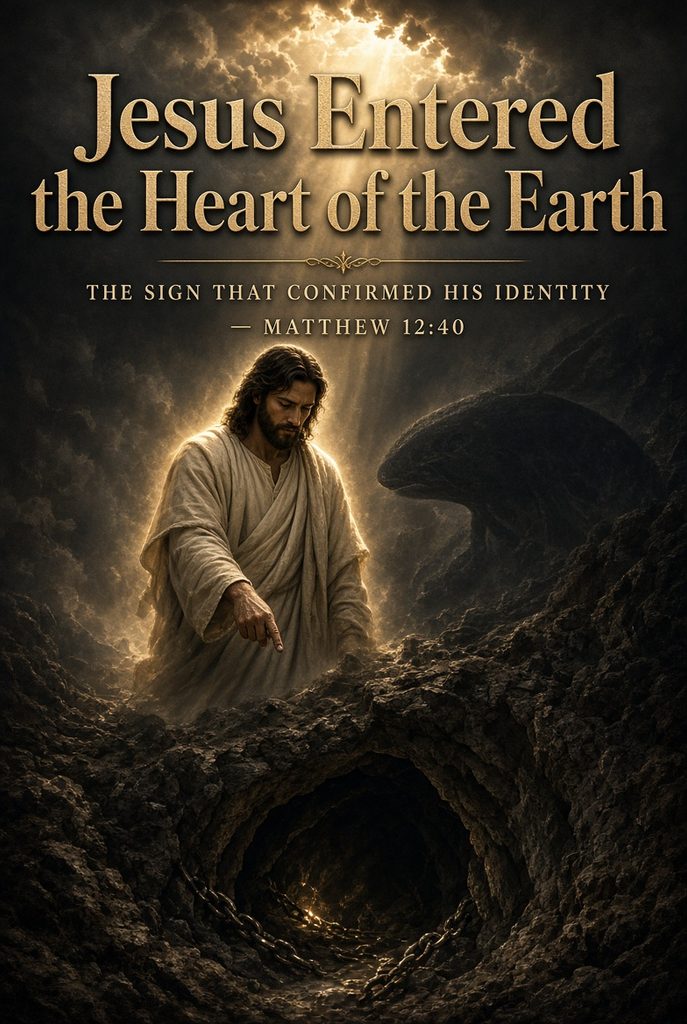
Jesus Himself declared the sign that would confirm His identity:
“For as Jonah was three days and three nights in the belly of a huge fish, so the Son of Man will be three days and three nights in the heart of the earth” (Matthew 12:40).
Jonah’s own prayer from inside the fish foreshadowed this reality: “From deep in the realm of the dead I called for help… To the roots of the mountains I sank down; the earth beneath barred me in forever. But you, Lord my God, brought my life up from the pit” (Jonah 2:2, 6).
Peter, filled with the Holy Spirit on the Day of Pentecost, explained what this meant by quoting Psalm 16:
“Therefore my heart is glad and my tongue rejoices; my body also will rest in hope, because you will not abandon me to the realm of the dead [Hades], you will not let your holy one see decay. You have made known to me the paths of life; you will fill me with joy in your presence” (Acts 2:26–28, quoting Psalm 16:9–11).
Peter then applied it directly: “Seeing what was to come, he spoke of the resurrection of the Messiah, that he was not abandoned to Hades, nor did his body see decay” (Acts 2:31). Paul later repeated the same truth: “So it is also stated elsewhere: ‘You will not let your holy one see decay’” (Acts 13:35).
Jesus truly died. His soul entered Hades, the temporary abode of the dead. Yet God did not leave Him there. On the third day His spirit and body were reunited in glorious resurrection. The risen Christ later declared, “I am the Living One; I was dead, and now look, I am alive for ever and ever! And I hold the keys of death and Hades” (Revelation 1:18).
Paul even alludes to this descent when he writes, “‘Who will descend into the deep?’ (that is, to bring Christ up from the dead)” (Romans 10:7).
Not for Punishment
Some have wrongly taught that Jesus went to hell to suffer additional torment or to finish paying for our sins. Scripture rejects that idea. On the cross Jesus declared the work complete: “It is finished” (John 19:30). Moments later He said, “Father, into your hands I commit my spirit” (Luke 23:46). His suffering ended at Calvary.
To the repentant thief He promised, “Truly I tell you, today you will be with me in paradise” (Luke 23:43). That promise would have been impossible if Jesus were headed into the torments of the damned. He went to the blessed side of Hades—not as a prisoner under judgment, but as the conquering Lord.
Hebrews confirms the purpose of His death: “Since the children have flesh and blood, he too shared in their humanity so that by his death he might break the power of him who holds the power of death—that is, the devil—and free those who all their lives were held in slavery by their fear of death” (Hebrews 2:14–15).
Isaiah had already prophesied the completeness of the cross: “He was pierced for our transgressions, he was crushed for our iniquities; the punishment that brought us peace was on him, and by his wounds we are healed… After he has suffered, he will see the light of life and be satisfied” (Isaiah 53:5, 11).
What Paradise Was
Before the cross, the righteous dead did not yet enter the full presence of God in heaven. The blood of bulls and goats could never take away sins completely (Hebrews 10:4). Old Testament believers were saved by faith in the coming Messiah, yet the final atonement had not been made. Therefore they waited in a place of comfort within the realm of the dead.
Jesus described this place in the account of the rich man and Lazarus (Luke 16:19–31). Lazarus died and was carried by angels to “Abraham’s side” (or “Abraham’s bosom”). It was a place of rest and fellowship with the patriarchs, separated by a great chasm from the place of torment where the unrighteous waited. This comforted compartment of Hades is what Jesus called “paradise” when speaking to the thief.
Paradise was real, conscious, and blessed—but it was still part of the underworld, not yet the highest heaven. The prophet Hosea had long pointed forward to the day when God would redeem His people from this realm: “I will deliver this people from the power of the grave; I will redeem them from death. Where, O death, are your plagues? Where, O grave, is your destruction?” (Hosea 13:14).
Hebrews later explains that Christ is “the mediator of a new covenant, that those who are called may receive the promised eternal inheritance—now that he has died as a ransom to set them free from the sins committed under the first covenant” (Hebrews 9:15).
He Led Captivity Captive
When Christ rose and later ascended, He did something decisive with those waiting saints. Paul writes:
“When he ascended on high, he took many captives and gave gifts to his people.”
(In saying, “He ascended,” what does it mean but that he also descended to the lower, earthly regions? He who descended is the very one who ascended higher than all the heavens, in order to fill the whole universe.)
—Ephesians 4:8–10
This is a direct application of Psalm 68:18: “When you ascended on high, you took many captives; you received gifts from people, even from the rebellious—that you, Lord God, might dwell there.”
The phrase “led captivity captive” (or “took many captives”) points to a triumphant liberation. Many faithful interpreters understand this to mean that Jesus emptied the paradise compartment of Hades. The Old Testament believers—Abraham, Moses, David, the prophets, and all who had trusted God’s promise—were no longer held in the lower regions. The barrier of unfinished atonement was removed by the blood of the Lamb. Christ led them out as a victorious procession and brought them into the very presence of God in heaven.
This aligns with the prophecy Jesus Himself read in the synagogue: “The Spirit of the Lord is on me, because he has anointed me to proclaim good news to the poor. He has sent me to proclaim freedom for the prisoners and recovery of sight for the blind, to set the oppressed free” (Luke 4:18, quoting Isaiah 61:1).
Peter further notes that Christ, “being put to death in the body but made alive in the Spirit… went and made proclamation to the imprisoned spirits” (1 Peter 3:18–19). And again: “For this is the reason the gospel was preached even to those who are now dead, so that they might be judged according to human standards in regard to the body, but live according to God in regard to the spirit” (1 Peter 4:6).
Matthew records a remarkable sign at the moment of Jesus’ death and resurrection: “The tombs broke open. The bodies of many holy people who had died were raised to life. They came out of the tombs after Jesus’ resurrection and went into the holy city and appeared to many people” (Matthew 27:52–53). This visible release of saints points to the greater spiritual liberation that took place in the unseen realm.
From that moment forward, paradise is no longer located in the heart of the earth. When Paul was caught up to the third heaven, he called it paradise (2 Corinthians 12:2–4). And today, when a believer dies, we are “absent from the body and present with the Lord” (2 Corinthians 5:8). Paul longed “to depart and be with Christ, which is better by far” (Philippians 1:23). There is no intermediate waiting place for the righteous. The door to the Father’s house stands open because Jesus has already led the captives home.
Colossians adds the note of total victory: “And having disarmed the powers and authorities, he made a public spectacle of them, triumphing over them by the cross” (Colossians 2:15). Paul also celebrates the final triumph: “Death has been swallowed up in victory… Where, O death, is your victory? Where, O death, is your sting?… But thanks be to God! He gives us the victory through our Lord Jesus Christ” (1 Corinthians 15:54–57).
Conclusion: The Finished Work, Our Need, and the Free Gift of Salvation
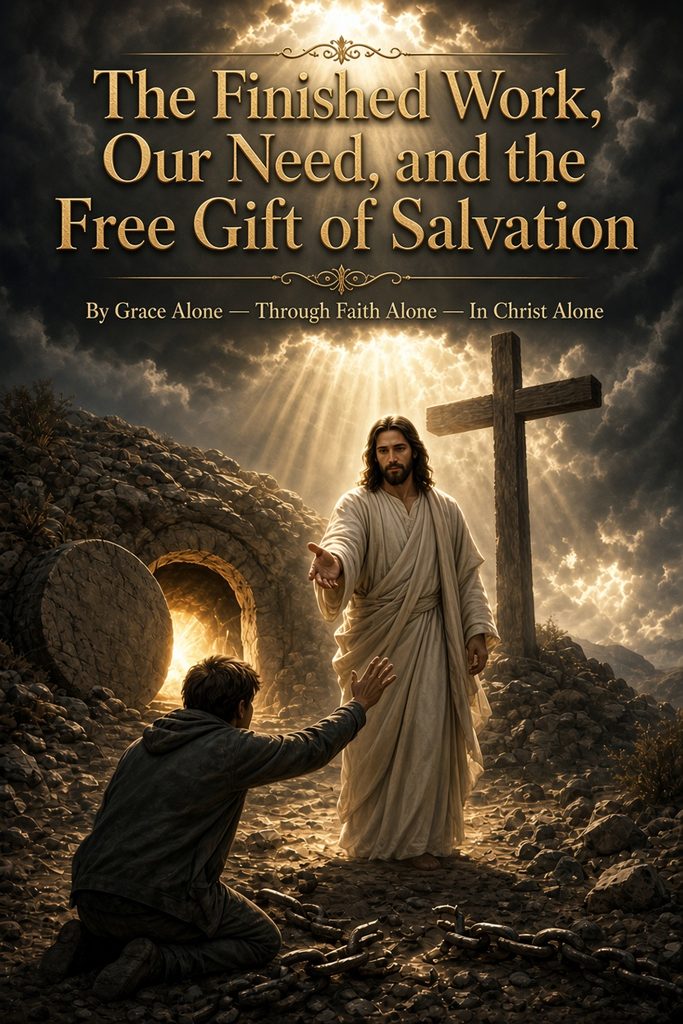
The story of Jesus’ three days in Hades is not a side note—it is the triumphant middle chapter of the gospel. On the cross He paid the full ransom. In Hades He proclaimed victory and released the captives. In the resurrection and ascension He relocated Paradise itself into the presence of God, bringing every Old Testament believer home.
This same finished work is the only hope for every one of us today. Scripture teaches that we are not sinners primarily because of the individual wrongs we have committed. We were born sinners because of Adam’s disobedience. “Therefore, just as sin entered the world through one man, and death through sin, and in this way death came to all people, because all sinned… For just as through the disobedience of the one man the many were made sinners, so also through the obedience of the one man the many will be made righteous” (Romans 5:12, 19). Adam’s single act of rebellion brought a sinful nature and the sentence of death upon the entire human race. We enter this world already under condemnation, already spiritually dead in Adam. The sins we later commit are simply the evidence—the outward proof—that we were born sinners. They reveal the corrupt nature we inherited; they do not create it.
That is why we desperately need a Saviour. Jesus Christ is that Saviour. He, the second Adam, obeyed perfectly where the first Adam failed. He died the death we deserved, rose again, and conquered death and Hades. Salvation is offered freely by grace alone—not by our good works, religious efforts, or moral improvement. “For it is by grace you have been saved, through faith—and this is not from yourselves, it is the gift of God—not by works, so that no one can boast” (Ephesians 2:8–9).
When we turn from relying on ourselves and place our trust in Christ alone, we are saved from the eternal judgment of Hell and given the certain hope of Heaven. The same Jesus who led the captives out of Hades now invites us to share in His victory. All who believe are rescued from the power of death and will live forever with Him in the presence of God.
Because of this finished work, death has lost its sting for all who belong to Christ. We no longer face an uncertain intermediate realm. Instead we have the sure promise of Jesus: “My Father’s house has many rooms; if that were not so, would I have told you that I am going there to prepare a place for you? And if I go and prepare a place for you, I will come back and take you to be with me that you also may be where I am” (John 14:2–3).
Paul reminds us that “we believe that Jesus died and rose again, and so we believe that God will bring with Jesus those who have fallen asleep in him” (1 Thessalonians 4:14). And the writer of Hebrews paints the glorious picture of our present reality: we have come “to Mount Zion, to the city of the living God, the heavenly Jerusalem… to the spirits of the righteous made perfect, to Jesus the mediator of a new covenant” (Hebrews 12:22–24).
Christ has destroyed death and “brought life and immortality to light through the gospel” (2 Timothy 1:10). The keys of death and Hades are in His hand. The captives have been set free. Paradise has been taken into heaven. And every believer who dies in Christ steps immediately into the presence of the Lord—where Abraham, Moses, David, the prophets, the thief on the cross, and all the redeemed already dwell in joy.
- He descended so that we might ascend with Him.
- He entered the realm of the dead so that death would never again hold those who belong to Him.
- He led captivity captive so that we might live forever free.
The call is urgent and clear.
Right now, turn from every confidence in yourself, your works, or your religion. Believe the gospel: that Jesus Christ, the Son of God, died for your sins according to the Scriptures, was buried, and rose again the third day according to the Scriptures. Repent—change your mind about sin, about self, and about Christ—and receive by faith the free gift of everlasting life.
The Saviour who emptied Hades stands ready to save you this very moment. Call upon Him, trust Him alone, and you will be saved from Hell and secured for Heaven forever with Jesus.
Glory to the risen, ascended, and soon-returning King!