
Dear friend,
In a world full of uncertainty, one truth stands eternal: God is holy, just, and loving. He created us for relationship with Him, but sin has separated us from that perfect fellowship. The Bible tells us that “all have sinned and fall short of the glory of God” (Romans 3:23), and the wages of sin is death (Romans 6:23). But here’s the good news—the Gospel: God sent His only Son, Jesus Christ, to die on the cross for our sins, rise from the dead, and offer us eternal life as a free gift through faith in Him. “For God so loved the world that He gave His only begotten Son, that whoever believes in Him should not perish but have everlasting life” (John 3:16). Salvation isn’t earned by good works; it’s received by trusting in Jesus alone (Ephesians 2:8-9 – “For by grace you have been saved through faith, and that not of yourselves; it is the gift of God, not of works, lest anyone should boast”).
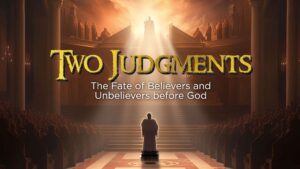
Yet, the Bible also speaks of a coming day when every person will stand before God in judgment. This isn’t a single event but two distinct judgments, each with its own purpose and outcome. These reveal God’s perfect justice and mercy, and understanding them can transform how we live today. Let’s explore them, based on Scripture.
1. The Great White Throne Judgment: For Unbelievers – A Judgment of Condemnation
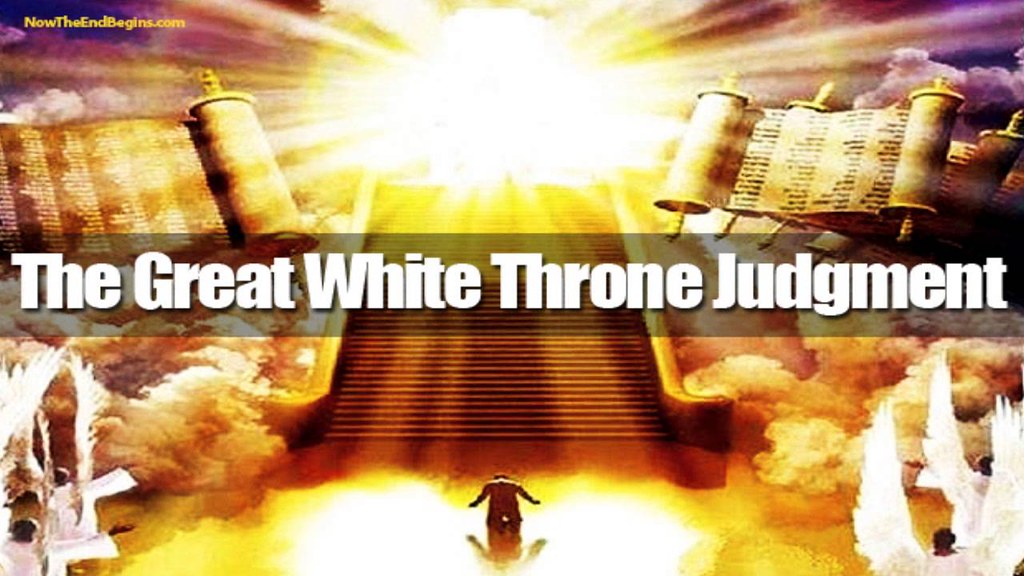
This solemn event is described in Revelation 20:11-15: “Then I saw a great white throne and Him who sat on it… And I saw the dead, small and great, standing before God, and books were opened. And another book was opened, which is the Book of Life.
And the dead were judged according to their works, by the things which were written in the books… And anyone not found written in the Book of Life was thrown into the lake of fire.”
This judgment is for those who have rejected God’s offer of salvation through Jesus Christ—unbelievers from all time. It’s not about earning salvation; rather, it exposes that without Christ’s forgiveness, our works fall short of God’s holiness. The “books” record every deed, thought, and word, but the key is the Book of Life. If your name isn’t there—written only through faith in Jesus—you face eternal separation from God, called the second death.
Importantly, Scripture teaches that punishment in eternity will not be the same for all unbelievers. God’s judgment is perfectly just and proportionate. Jesus Himself said in Luke 12:47-48 that the servant who knew his master’s will but did not prepare will be beaten with many stripes, while the one who did not know will be beaten with few. Cities that rejected Christ’s message would face greater condemnation than Sodom (Matthew 11:20-24). Someone like Hitler, whose monstrous evil caused unimaginable suffering and rejected all light, will receive far greater condemnation than a person who lived a relatively moral life but still rejected Christ. Degrees of knowledge and responsibility lead to degrees of punishment—yet all without Christ face eternal separation from God. This isn’t God’s desire; He “is not willing that any should perish but that all should come to repentance” (2 Peter 3:9). But rejection of the Gospel leaves no other path.
2. The Judgment Seat of Christ: For Believers – A Judgment of Rewards

In contrast, believers in Jesus—those who have accepted Him as Savior and Lord—will appear before a different seat: the Judgment Seat (or “Bema Seat”) of Christ.
As 2 Corinthians 5:10 states, “For we must all appear before the judgment seat of Christ, that each one may receive the things done in the body, according to what he has done, whether good or bad.” Romans 14:10 echoes this: “We shall all stand before the judgment seat of Christ.”
This isn’t about determining salvation—that’s already secured forever as a free gift by grace through faith alone (Ephesians 2:8-9; John 10:28). No believer will face condemnation (Romans 8:1). Instead, it’s an evaluation of how faithfully we’ve lived for Christ after being saved. 1 Corinthians 3:10-15 vividly describes it: Our lives are like buildings constructed on the one true foundation—Jesus Christ. The materials we use represent our works: gold, silver, and precious stones are enduring works done in obedience, with right motives, for God’s glory (such as sharing the Gospel, serving others in love, and pursuing holiness). These will survive the testing fire and bring reward. Wood, hay, and stubble represent worthless or selfish works (done for praise of men, with wrong motives, or in the flesh). These will be burned up—yet the believer themselves will still be saved, “yet so as through fire.”

The eternal rewards are not salvation itself (that’s the gift); they are additional blessings for faithfulness. Scripture mentions various crowns (e.g., the crown of righteousness for those who love His appearing – 2 Timothy 4:8;
the crown of life for enduring trials – James 1:12), greater responsibilities or authority in Christ’s coming kingdom (Luke 19:17-19), and deeper joy and intimacy with God. Not all believers will receive the same rewards—some will have abundant reward for lives fully surrendered to Christ; others will have little or none, suffering loss of reward though still saved. It’s a time of accountability and celebration, not fear, because Jesus has already paid for our sins.
These two seats highlight a profound difference: The Great White Throne is about eternal destiny based on rejection or acceptance of Christ, with varying degrees of punishment for the lost. The Judgment Seat of Christ is about eternal rewards based on faithfulness to Christ, with varying degrees of reward for the saved. One is for the lost; the other for the saved. As Hebrews 9:27 reminds us, “It is appointed for men to die once, but after this the judgment.” Which seat will you face?
The Book Of Life Vs The Lamb’s Book Of Life — A Gospel Warning
A Clear Gospel Warning for Our Time
Many people comfort themselves with the idea: “God wouldn’t judge me. I’m a good person.”
The Bible directly confronts that assumption — and it does so by speaking of two books, not one.
Confusing these books leads people to false hope. Understanding the difference can mean the difference between eternal life and eternal judgment.
1. The Book of Life — God’s Record of Accountability
The Book of Life is not a salvation list. It is a judicial record.
Scripture shows that:
- Names can be written in it (acknowledgement of life given by God)
- Names can be blotted out (judicial exclusion)
- It is opened at the Great White Throne Judgment (Revelation 20:12)
This book records that every person:
- Received life from God
- Lived under God’s moral authority
- Was accountable for the truth they encountered
Being in the Book of Life does not mean a person is saved. It means God’s judgment will be fully just, informed, and undeniable.
Some names remain listed. Others are blotted out — a public declaration that a person persistently rejected God despite knowledge, warning, and opportunity.
The Book of Life answers one question:
Was God fair to judge this person?
And the answer will be yes.
2. The Lamb’s Book of Life — Redemption, Not Record-Keeping
The Lamb’s Book of Life is entirely different.
This book:
- Belongs to Jesus Christ
- Contains only the redeemed
- Is written through faith in the Lamb who was slain
- Is never described as having names blotted out
Scripture is clear:
- Only those written in the Lamb’s Book of Life enter God’s eternal kingdom (Revelation 21:27)
- Those who belong to Christ are secure forever (John 10:28)
- There is no condemnation for those in Christ Jesus (Romans 8:1)
Salvation is not probationary. Christ does not erase those He purchased with His blood.
Once your name is written in the Lamb’s Book of Life, it is written forever.
3. Same Destination for the Lost — Perfectly Just Judgment
The Bible is sobering but precise:
- All who reject Christ face the same final destination — the lake of fire
- But judgment is proportionate to the light rejected and truth resisted
Jesus taught that:
- Some will receive many stripes, others few (Luke 12:47–48)
- Some will face greater condemnation than others (Matthew 11:21–24)
The Book of Life records accountability.
Blotting out confirms guilt — it does not create a different destination.
The Lamb’s Book of Life alone determines eternal life.
4. The Dangerous Lie: “God Wouldn’t Judge Me”
This is one of Satan’s oldest deceptions.
God is not judged by human comparisons:
- Not by culture
- Not by intentions
- Not by comparison with others
God judges by truth.
Every excuse will fail. Every mouth will be silenced. Every life will be measured against God’s holiness.
The question will not be:
- Were you religious?
- Were you moral?
- Were you sincere?
The question will be:
Was your name written in the Lamb’s Book of Life?
5. The Gospel — Your Name Can Be Written Today
As long as you are alive, mercy is available.
Jesus said:
“The one who comes to Me I will never cast out.” (John 6:37)
- You are not saved by good deeds.
- You are not saved by religion.
- You are saved by repenting, believing, and trusting in Christ alone.
Creation gives life.
Only the Lamb gives eternal life.
And once your name is written in His book, it will never be erased.
A Final Warning
- There are many books.
- There is only one that saves.
- Do not assume God will overlook sin.
- Do not assume sincerity is enough.
- Do not assume time will always remain.
- The books will be opened.
- The verdict will be final.
Make sure your name is written in the Lamb’s Book of Life — while mercy is still being offered.
The choice is yours today. If you’re not sure your name is in the Book of Life, turn to Jesus now. Confess your sins, believe in His death and resurrection, and receive Him as Lord. Pray something like:
“Lord Jesus, I admit I’m a sinner. I believe You died for me and rose again. I turn from my sin and trust You alone for salvation. Amen.”
If you do, you’ll escape the Great White Throne and stand before Christ for rewards, not condemnation.
If you’re already a believer, live with eternity in mind—build with gold, not stubble. Share this Gospel with others, for time is short.
In Christ’s love,
A Messenger of Hope
Contact Us

If you have any questions or would like more information, please complete our Contact Form. Add the name of this blog, The Two Judgments Seats of God, then add your message
Reach NZ is committed to equipping Kiwis to share this hope through evangelism. Explore our resources and join us in reaching New Zealand with the gospel.
In Christ’s love,
The Reach NZ Ministry Team
www.reachnz.org