

Why Every Believer Should Be Horrified into Urgent Evangelism
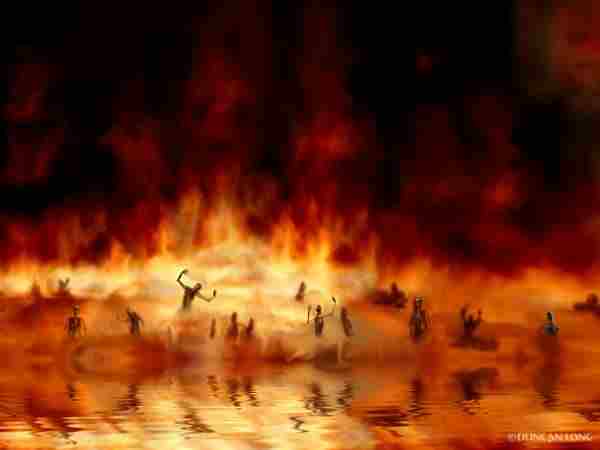
In a world that often downplays the consequences of sin and eternity, the Bible paints a stark and sobering picture of what awaits those who reject God’s offer of salvation. Hell is not a myth or metaphor—it’s a real place of torment, and the lake of fire represents the ultimate, eternal punishment for the unrepentant.
As believers, understanding this reality should not only horrify us but propel us into urgent evangelism, sharing the Gospel with everyone we can. This blog will explore these truths from Scripture, tracing sin’s origin, the nature of death, God’s mercy through Christ, and why the eternal stakes demand our immediate action. We’ll also address false doctrines like annihilationism and conclude with a call to proclaim the life-changing Gospel.
The Origin of Sin: Inherited Through Adam, Not Our Personal Acts

We didn’t become sinners because of any personal sin we committed. Instead, sin entered the human race through one man’s disobedience—Adam. As Romans 5:12 declares, “Therefore, just as through one man sin entered into the world, and death through sin, and so death spread to all men, because all sinned.”
Adam’s act in the Garden of Eden introduced a sinful nature that we all inherit, making us sinners by birth, not merely by choice. We sin because we are sinners, not the other way around (Psalm 51:5: “Behold, I was brought forth in iniquity, And in sin my mother conceived me.”).
This is crucial because Adam’s specific sin—eating from the tree of the knowledge of good and evil (Genesis 2:16-17: “The LORD God commanded the man, saying, ‘From any tree of the garden you may eat freely; but from the tree of the knowledge of good and evil you shall not eat, for in the day that you eat from it you will surely die'”)—is not one we can commit today. That tree no longer exists in our access, so believers cannot “repeat” Adam’s sin and lose their salvation. Once born again, we are secure in Christ (John 10:28-29: “and I give eternal life to them, and they will never perish; and no one will snatch them out of My hand. My Father, who has given them to Me, is greater than all; and no one is able to snatch them out of the Father’s hand.”). A born-again believer cannot become lost again because our salvation is sealed by the Holy Spirit (Ephesians 1:13-14: “In Him, you also, after listening to the message of truth, the gospel of your salvation—having also believed, you were sealed in Him with the Holy Spirit of promise, who is given as a pledge of our inheritance, with a view to the redemption of God’s own possession, to the praise of His glory.”).
The Meaning of Death: Spiritual Separation, Not Immediate Physical End
When God commanded Adam, “You may surely eat of every tree of the garden, but of the tree of the knowledge of good and evil you shall not eat, for in the day that you eat of it you shall surely die” (Genesis 2:16-17),
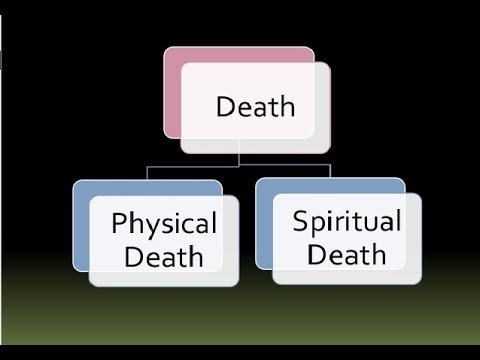
He wasn’t referring solely to physical death. Adam didn’t drop dead physically the moment he ate the fruit; he lived for centuries afterward (Genesis 5:5). Instead, death here primarily means spiritual death—an immediate separation from God.
Spiritual death occurred instantly: Adam and Eve hid from God (Genesis 3:8: “They heard the sound of the LORD God walking in the garden in the cool of the day, and the man and his wife hid themselves from the presence of the LORD God among the trees of the garden.”), their fellowship broken by disobedience. They were now “dead in [their] trespasses and sins” (Ephesians 2:1), alienated from God’s life and presence. This spiritual death means eternal separation from God if not remedied, culminating in hell and the lake of fire. Physical death follows later as a consequence, but the core issue is relational rupture—being “dead to God” and in need of saving grace.
Death, biblically, is not cessation of existence but separation. For unbelievers, it begins with spiritual death on earth (Isaiah 59:2: “But your iniquities have made a separation between you and your God, And your sins have hidden His face from you so that He does not hear.”), continues in physical death, and leads to eternal torment. In contrast, believers experience physical death but gain eternal life, beginning now and continuing in heaven (John 5:24: “Truly, truly, I say to you, he who hears My word, and believes Him who sent Me, has eternal life, and does not come into judgment, but has passed out of death into life.”).
God’s Immediate Mercy: A Shadow of the Coming Savior
In His mercy, God didn’t leave Adam and Eve in utter despair. He provided animal skins to cover their nakedness (Genesis 3:21: “The LORD God made garments of skin for Adam and his wife, and clothed them.”), implying a sacrifice—the first bloodshed pointing to atonement.
This was a temporary shadow of Jesus Christ, the Lamb of God who would take away the sin of the world (John 1:29: “Behold, the Lamb of God who takes away the sin of the world!”). Hebrews explains that Old Testament sacrifices were mere foreshadows, unable to fully remove sin, but they anticipated Christ’s perfect sacrifice: “He has appeared once for all at the end of the ages to put away sin by the sacrifice of himself” (Hebrews 9:26).
Through Jesus, God saves humanity from the penalty of Adam’s sin—death. Without this, we’d all face eternal separation.
The Penalty of Sin: Eternal Torment in Hell and the Lake of Fire

The penalty for Adam’s sin is death—eternal, spiritual separation manifesting in hell and ultimately the lake of fire. Hell (Sheol/Hades in Scripture) is a real place of conscious torment for the unsaved dead.
Jesus describes it vividly in Luke 16:19-31, where the rich man in Hades begs for relief from flames, fully aware and in agony. It’s a holding place until the final judgment.
At the Great White Throne Judgment (Revelation 20:11-15), death and Hades are thrown into the lake of fire: “And if anyone’s name was not found written in the book of life, he was thrown into the lake of fire.” This is “the second death” (Revelation 20:14), eternal torment: “They will be tormented day and night forever and ever” (Revelation 20:10; see also Matthew 25:41, 46: “eternal fire prepared for the devil and his angels… eternal punishment”).
What happens to a sinner who dies without Christ? They enter hell immediately (Luke 16:23), conscious and suffering, then face final judgment and eternal torment in the lake of fire. This isn’t temporary—it’s “forever and ever” (Revelation 14:11: “The smoke of their torment goes up forever and ever, and they have no rest, day or night”).
In comparison, believers receive eternal life in Christ the moment they believe the Gospel and are born again (John 3:3-5), translated from the kingdom of darkness into God’s kingdom (Colossians 1:13). When we die, we face the Judgment Seat of Christ (2 Corinthians 5:10), not for salvation—which is a free gift by grace through faith, not works (Ephesians 2:8-9: “For by grace you have been saved through faith; and that not of yourselves, it is the gift of God; not as a result of works, so that no one may boast.”)—but for rewards based on faithfulness. As 1 Corinthians 3:11-15 explains, our works are tested by fire; gold, silver, and precious stones endure for rewards, while wood, hay, and stubble burn up, yet “he himself will be saved, but only as through fire.” Salvation is not earned by good works, but we are rewarded for them.
Both believers and unbelievers receive eternal bodies at resurrection (Daniel 12:2: “Many of those who sleep in the dust of the ground will awake, these to everlasting life, but the others to disgrace and everlasting contempt.”). Unbelievers’ eternal death doesn’t mean annihilation—they continue existing in torment without God (2 Thessalonians 1:9: “eternal destruction, away from the presence of the Lord”). Believers enjoy eternal bodies in heaven with God (1 Corinthians 15:42-44).
Why Annihilationism Is an Unbiblical False Doctrine
Annihilationism teaches that the wicked cease to exist after judgment, destroyed rather than eternally tormented. This contradicts clear Scripture. Jesus equates the duration of punishment with life:
“These will go away into eternal punishment, but the righteous into eternal life” (Matthew 25:46)—if life is eternal, so is punishment. Revelation 14:10-11 describes torment “in the presence of the Lamb… forever and ever,” not extinction. Mark 9:48 speaks of “where THEIR WORM DOES NOT DIE, AND THE FIRE IS NOT EXTINGUISHED,” echoing Isaiah 66:24.
Annihilationism softens God’s justice and holiness, undermining the urgency of the Gospel. If unbelievers simply vanish, why the horror? But Scripture affirms conscious, eternal suffering as the just penalty for rejecting infinite God. Even atheists are often happy with annihilationism because ceasing to exist is not a horrific consequence for not obeying the Gospel—it’s essentially what many already believe happens after death anyway, a peaceful non-existence rather than any form of suffering. Therefore, it’s not that bad of an idea in their view, as it removes any fear of accountability or ongoing punishment. This false doctrine diminishes the power of grace by making the eternal torment from which Christ saves us seem trivial or nonexistent, rendering God’s sacrificial love through Jesus unimportant or unnecessary. It appeases the conscience of unbelievers by suggesting no real consequences beyond this life, giving them a false sense of security that they can live as they please without facing divine justice, thus blunting the call to repentance and faith.
Personal Responsibility: Free Choice to Accept or Reject Salvation
Every sinner is responsible to accept what Jesus has done—dying for our sins, rising again—to escape the lake of fire and receive eternal life (Romans 10:9-10: “that if you confess with your mouth Jesus as Lord, and believe in your heart that God raised Him from the dead, you will be saved; for with the heart a person believes, resulting in righteousness, and with the mouth he confesses, resulting in salvation.”).
It’s a free choice; God won’t violate our will (Joshua 24:15: “Choose this day whom you will serve”). He desires all to be saved (2 Peter 3:9), but respects rejection, leading to self-chosen separation.
The Horror That Demands Urgent Evangelism
Knowing this terrifying reality—that loved ones, neighbors, or strangers could die without Christ and enter eternal torment—should horrify every believer. If we truly grasp Luke 16‘s rich man pleading for his brothers to be warned, how can we stay silent? This alone is incentive enough to proclaim the Gospel to whomsoever, wherever—fulfilling the Great Commission to “go into all the world and proclaim the gospel to the whole creation” (Mark 16:15). It should motivate us to preach to all nations, driven by compassion and holy fear.
Exhortation: Proclaim the Most Powerful Message in the World
Believers, let’s be horrified into action! The Gospel is the most powerful message ever—capable of transforming the worst sinner into a new creation (2 Corinthians 5:17).
It alone saves from eternal torment in the lake of fire, granting eternal life with Jesus, starting now. Don’t hoard it; share it urgently.
The Gospel Message as Preached by the Apostles
The apostles proclaimed that salvation is by grace alone through faith alone in Christ alone—a completely free gift from God, with absolutely no contribution from us.
“Romans 3:23-24: for all have sinned and fall short of the glory of God, being justified as a gift by His grace through the redemption which is in Christ Jesus.” Jesus died for our sins according to the Scriptures, was buried, and rose on the third day (1 Corinthians 15:3-4: “For I delivered to you as of first importance what I also received, that Christ died for our sins according to the Scriptures, and that He was buried, and that He was raised on the third day according to the Scriptures.”). “Believe in the Lord Jesus, and you will be saved” (Acts 16:31).
Salvation is by grace alone because we are utterly helpless—dead in sin and incapable of earning God’s favour through any effort of our own (Ephesians 2:8-9: “For by grace you have been saved through faith; and that not of yourselves, it is the gift of God; not as a result of works, so that no one may boast.”). If even the smallest part depended on our good works, religious rituals, sacraments, church attendance, or moral improvement, no one could ever be saved, and we would have reason to boast before God. But Scripture is clear: there is nothing we can add to what Christ has already fully accomplished. His death and resurrection completely satisfied God’s justice and fulfilled all righteousness on our behalf. To attempt to add anything—whether good deeds or sacraments—is to reject the sufficiency of Christ’s finished work and to fall from grace (Galatians 5:4).
The only response God requires is to simply believe—to trust completely in what Jesus has done, relying on Him alone as Savior. This faith is itself a gift from God, not something we manufacture. Just believe and trust in Christ’s perfect, once-for-all sacrifice—nothing more, nothing less.
However, simply getting an unbeliever to repeat a “salvation prayer” after us will not save them. A scripted prayer, said without true understanding or heart conviction, is meaningless—like the empty words Jesus condemned in Matthew 15:8: “This people honors me with their lips, but their heart is far from me.” Salvation is not a magical formula or ritual; it requires personal, genuine faith.
This is why we must faithfully help the sinner understand and believe the Gospel of the Kingdom—the glorious message that Jesus Christ, the King, died for our sins, was buried, and rose victorious, offering forgiveness, reconciliation, and eternal life to all who surrender to Him as Lord. As we clearly explain this Gospel, the Holy Spirit uses the Word to convict the sinner of sin, of righteousness, and of judgment to come (John 16:8: “And He, when He comes, will convict the world concerning sin and righteousness and judgment”). This divine conviction opens their eyes to their guilt, to Christ’s perfect righteousness, and to the reality of coming judgment, enabling the gift of faith (Ephesians 2:8) so they can truly believe in their heart and confess Jesus as Lord. Without this sovereign work of the Holy Spirit, no sinner can be converted to Christ—they remain spiritually dead and unable to come to Him on their own (John 6:44). True salvation requires this personal encounter with the Holy Spirit, who alone regenerates and draws the soul to Christ.
We are merely ambassadors for Christ, as though God were making His appeal through us (2 Corinthians 5:20: “Therefore, we are ambassadors for Christ, as though God were making an appeal through us; we beg you on behalf of Christ, be reconciled to God.”): “We implore you on behalf of Christ, be reconciled to God.” When we proclaim the Gospel, the unbeliever ultimately hears God’s voice calling them, not merely ours—He speaks through His Word and by His Spirit to awaken faith and grant repentance (2 Timothy 2:25). Our role is to faithfully declare the message, pray earnestly, and trust the Spirit to do the saving work.
We must endeavor to help the sinner fully understand the Gospel of the Kingdom. They need to grasp what it truly means to “confess with your mouth that Jesus is Lord and believe in your heart that God raised him from the dead” (Romans 10:9). Confessing Jesus as Lord means surrendering to Him as the rightful King and Master of your life, acknowledging His authority over you. Believing in your heart that God raised Him from the dead means trusting with deep, personal conviction—not mere intellectual assent—that Christ’s resurrection proves He is the Savior who paid your sin debt. This heart-belief leads to righteousness and mouth-confession unto salvation (Romans 10:10). Only when the Gospel is understood and received in this way does God regenerate the sinner, making them a new creation. Our role is to clearly explain these truths, pray for the Holy Spirit to convict, and trust God for the results—never rushing someone into empty words that provide false assurance.
Repent and trust in Him today—eternal life awaits!
Contact Us
If you have any questions or would like more information, please complete our Contact Form. Add the name of this blog, The Terrifying Reality of Hell and the Lake of Fire, then add your message