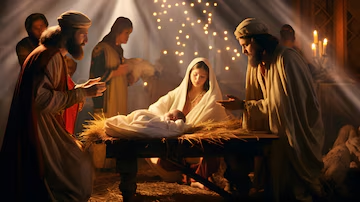
In the heart of Christian theology lies one of the most profound mysteries: the virgin birth of Jesus Christ. This isn’t just a quaint detail in the Christmas story—it’s a cornerstone of why Jesus could be both fully God and fully human, yet without the stain of sin that plagues the rest of humanity. Drawing from biblical principles, let’s unpack why God orchestrated this miraculous conception through the Holy Spirit and a virgin named Mary. We’ll explore the origins of sin, how it’s transmitted, and why a human father would have disqualified Jesus from being our sinless Savior.
The Entry of Sin: One Man’s Fall Affects All—Through Adam, Not Eve
To understand the virgin birth, we must start at the beginning—with Adam and Eve in the Garden of Eden. According to Genesis 2:16-17, God gave the commandment directly to Adam:
“The LORD God commanded the man, saying, ‘From any tree of the garden you may eat freely; but from the tree of the knowledge of good and evil you shall not eat, for in the day that you eat from it you will surely die.'” This command was issued to Adam personally, before Eve was even created (Genesis 2:18-22). Eve was formed afterward, and while Adam likely shared the instruction with her, the direct responsibility and headship rested with Adam.
When the serpent tempted Eve in Genesis 3, she was deceived into becoming a sinner. The serpent, who was Satan in disguise, subtly questioned God’s word by asking, “Indeed, has God said, ‘You shall not eat from any tree of the garden’?” (Genesis 3:1). He then lied outright, saying, “You surely will not die! For God knows that in the day you eat from it your eyes will be opened, and you will be like God, knowing good and evil” (Genesis 3:4-5). Eve, seeing that the fruit was good for food, pleasing to the eye, and desirable for gaining wisdom, took some and ate it (Genesis 3:6). Her sin stemmed from being tricked—she believed the lie and acted on the deception.
In contrast, Adam wilfully became a sinner. He was with her during the temptation (Genesis 3:6), yet he ate the fruit knowing full well God’s direct command to him. Unlike Eve, Adam was not deceived; he deliberately chose to disobey, fully aware of the prohibition and its consequences. As Paul explains in 1 Timothy 2:14: “And it was not Adam who was deceived, but the woman was deceived and became a wrongdoer.” Adam, having received the prohibition directly from God, deliberately chose to disobey. He was not tricked—he knew exactly what God had commanded and still ate.
The moment Adam disobeyed God’s direct commandment and ate from the forbidden tree, sin and death immediately entered him. God had warned that “in the day that you eat from it you will surely die” (Genesis 2:17)—and on that very day, spiritual death (separation from God) occurred. Their fellowship with God was broken; shame entered, they hid from His presence (Genesis 3:7-10), and they were eventually banished from the Garden. From that instant, Adam’s nature became corrupted with sin—this corruption affected him at the deepest level, including his very human makeup, which we can understand in modern terms as entering his DNA. This sinful corruption was now embedded in his genetic material and would be passed on biologically to every descendant through natural procreation.
This original transgression was a specific sin tied to direct access to the tree of the knowledge of good and evil—a sin that believers today (or anyone after the Fall) cannot commit because the Garden is closed to us, and we have no access to that forbidden tree (Genesis 3:24). No one today can repeat Adam’s exact act of eating from that particular tree in defiance of God’s personal command.
We become sinners not because of anything we personally did, but because we inherit Adam’s sin and sinful nature by birth—genetically passed down through the male line. We are born already bearing the guilt and corruption from Adam’s disobedience—imputed to us as his descendants. The sins we commit throughout life are not what make us sinners; they are the evidence and fruit proving we were born sinners. Our personal transgressions demonstrate the sinful nature we inherited, but they are not the cause of our sinful condition before God.
To become a sinner means to be separated from God, experiencing spiritual death and broken fellowship. In the Garden, Adam and Eve’s disobedience brought immediate consequences: their eyes were opened to their nakedness, they felt shame and hid from God (Genesis 3:7-10), and they were expelled from Eden to prevent access to the tree of life (Genesis 3:22-24). This separation is not just physical but spiritual—humanity now stands under God’s judgment, alienated from His holy presence, and in need of a Savior to bridge the gap. Without reconciliation, sinners face eternal separation from God, but the promise of a Redeemer offers hope for restoration.
In His mercy, God provided the first blood sacrifice right after the fall. In Genesis 3:21, “The LORD God made garments of skin for Adam and his wife, and clothed them.” This act required slaying an innocent animal, shedding its blood to cover their shame and nakedness. It was a foreshadowing of atonement: the innocent dying for the guilty to satisfy God’s justice. This animal sacrifice represented what Jesus, the ultimate Lamb of God, would do—shed His blood on the cross to pay the penalty for sin, restore humanity’s relationship with God, and renew fellowship. Through this, God demonstrated that sin requires a blood payment (Hebrews 9:22), but He Himself would provide the perfect sacrifice in Christ to save Adam, Eve, and all who believe from eternal separation.
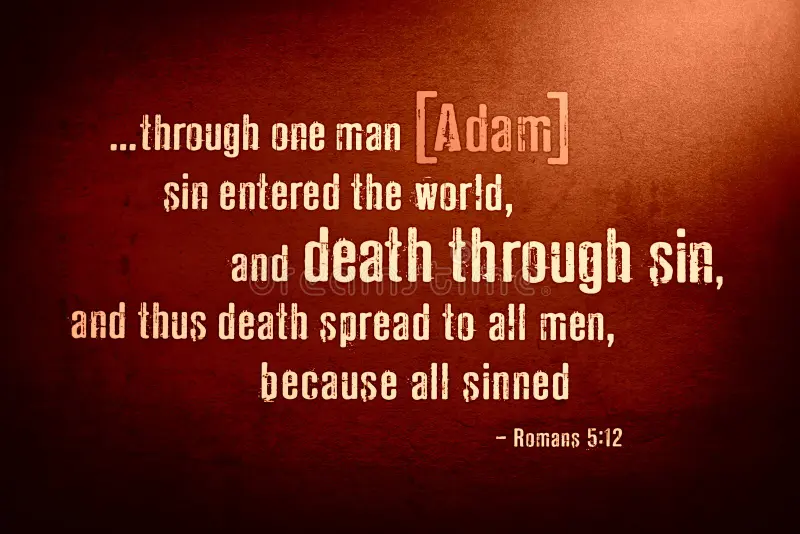
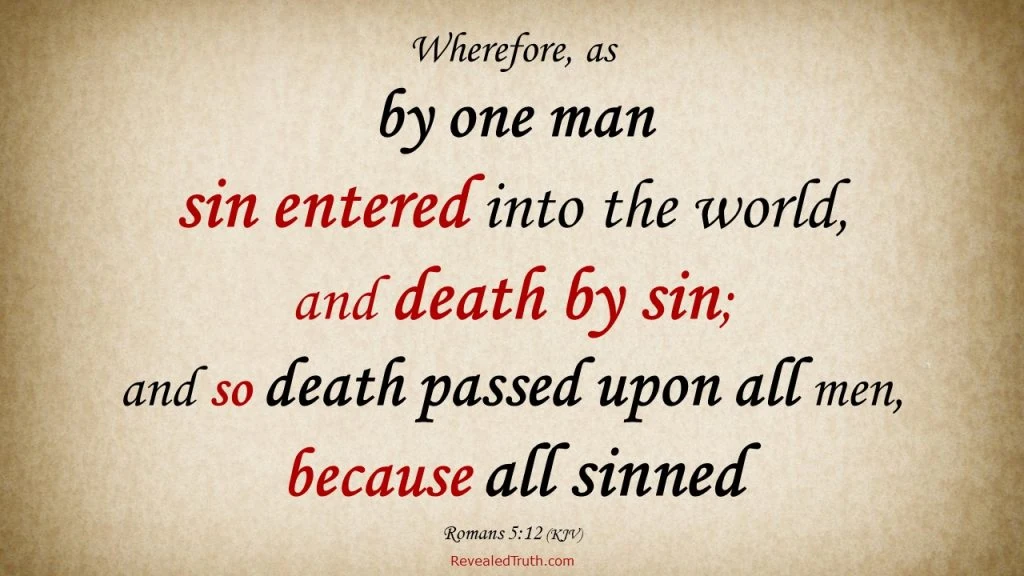
Both sinned, but Scripture consistently identifies Adam—not Eve—as the one through whom sin and death entered the world. Paul states in Romans 5:12: “Therefore, just as through one man sin entered into the world, and death through sin, and so death spread to all mankind, because all sinned.” Again in 1 Corinthians 15:22: “For as in Adam all die, so also in Christ all will be made alive.”
Why Adam and not Eve? Because God had appointed Adam as the federal head and representative of the human race. The command was given to him directly, establishing his leadership and accountability. Eve’s sin came through deception, but Adam’s was a knowing, willful rebellion against the clear will of God he had personally received. This deliberate act by the covenant head is why the guilt and curse of original sin are imputed to all mankind through Adam’s transgression.
The Apostle Paul explains this in Romans 5:12: “Therefore, just as through one man sin entered into the world, and death through sin, and so death spread to all mankind, because all sinned.” Adam’s sin wasn’t isolated—it spread like a spiritual virus to every descendant. This is the doctrine of original sin: humanity inherits a sinful nature not through individual actions, but through our connection to Adam. We’re not born neutral, only becoming sinners when we break God’s laws. Instead, we’re born into a state of sin, inclined toward rebellion from the start.
Think of it like a corrupted family tree. Adam, as the federal head of humanity, represented us all. His failure imputed (or credited) sin to every person who comes after him. This explains why even infants, who haven’t committed personal sins, still face mortality—death is the wage of sin (Romans 6:23), and it’s woven into our very existence from birth.
The Transmission of Sin: Through the Male Seed
Because the responsibility for the original transgression rested with Adam—the one who received God’s direct command and wilfully disobeyed while not being deceived—the sin nature is passed down through the male line, via the father’s seed (sperm), which carries the genetic material.
This is precisely why sin is transmitted to all mankind genetically through the male seed and not through the woman. Eve’s deceived sin did not carry the same federal headship; Adam’s willful violation did. This is a spiritual principle rooted in Scripture that aligns with the biological reality of genetic inheritance primarily traced through the paternal line for this corruption.
Biblical genealogies trace descent and inheritance through fathers, reflecting this headship. Adam’s unique role—receiving the command first-hand, not being deceived, and yet choosing rebellion (1 Timothy 2:13-14)—makes the paternal line the channel for transmitting the curse genetically. The mother’s role provides the human flesh and much of the DNA, but the imprint of Adam’s sinful corruption is carried and activated through the male seed. This is why God required a virgin birth: to prevent Jesus from inheriting the sinful corruption embedded in Adam’s genetic DNA through a human father.
We don’t become sinners because we inevitably break God’s law (though we do). No, we’re sinners by birthright, receiving Adam’s curse genetically through the male contribution to conception. This explains why all humans are “born in sin”—it’s not a choice; it’s our default state (Ephesians 2:3).
Mary: A Sinner in Need of a Savior
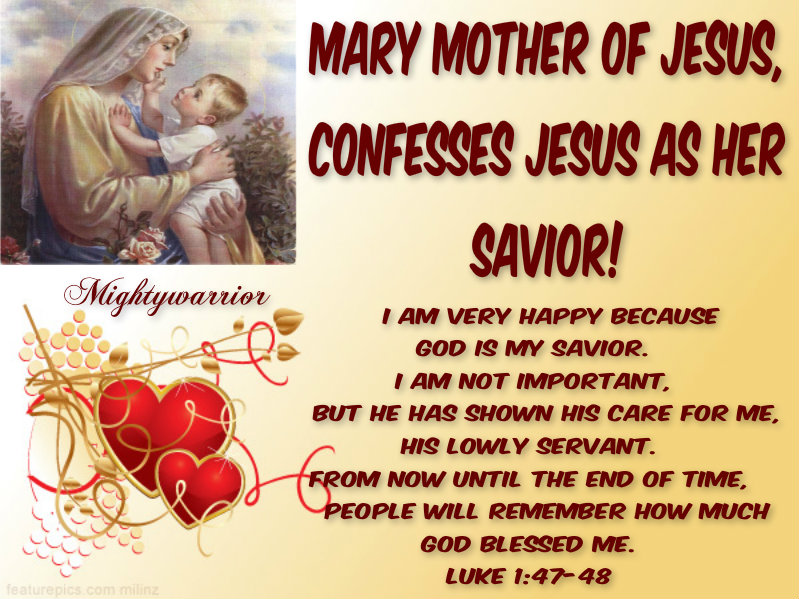
Mary herself was no exception to this rule. Like every other human, she had a human father and thus inherited the sin nature genetically through the male seed, just as we all do.
The Bible affirms that “for all have sinned and fall short of the glory of God” (Romans 3:23), with the only exception being Jesus Christ. Mary openly acknowledged her need for salvation in her Magnificat: “And my spirit has rejoiced in God my Savior” (Luke 1:47). By calling God her Savior, she confessed her own sinfulness—no sinless person needs a Savior.
Mary was a godly woman, highly favoured by God (Luke 1:28-30), but she was not sinless. She was justified—like all Old Testament believers—by faith. Under the Mosaic Law, animal sacrifices provided a temporary covering for sins, pointing forward to the ultimate sacrifice of the promised Messiah (Hebrews 10:1-4). These sacrifices did not remove sin permanently but foreshadowed Christ’s perfect atonement. Old Testament saints, including Mary, looked forward in faith to the coming Redeemer, trusting in God’s promises (Romans 4; Galatians 3:6-9). Her righteousness came through faith in what those sacrifices represented—the Lamb of God who would take away the sins of the world—not because she was inherently sinless.
Why a Human Father Would Have Made Jesus a Sinner
Now, apply this to Jesus. If Jesus had been conceived through a human father like Joseph, He would have inherited the same sinful nature as every other person—the corruption in Adam’s DNA passed genetically through Joseph’s seed, imprinting sin on Jesus from the moment of conception.
A sinful Jesus couldn’t be the perfect sacrifice for humanity’s sins—He’d need saving Himself!
The Bible is clear: Jesus was sinless. Hebrews 4:15 describes Him as “For we do not have a high priest who cannot sympathise with our weaknesses, but One who has been tempted in all things as we are, yet without sin.” And 2 Corinthians 5:21 states, “He made Him who knew no sin to be sin on our behalf, so that we might become the righteousness of God in Him.” If Jesus had a human father, this sinlessness would be impossible. He’d be born under the same condemnation as us, disqualified from bridging the gap between a holy God and sinful humanity.
The Divine Solution: Conception by the Holy Spirit
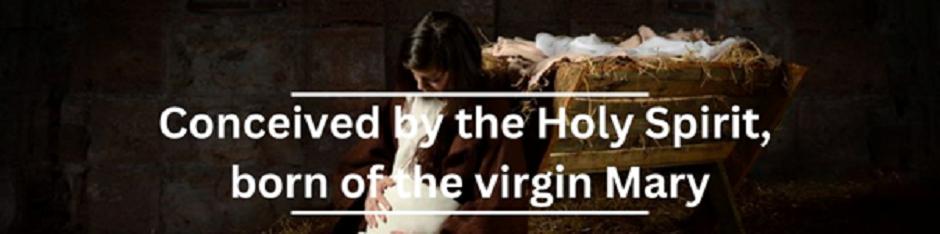
This is why the virgin birth was essential—and why God specifically needed a virgin birth to ensure Jesus would not inherit the sin embedded in Adam’s genetic DNA.
In Luke 1:35, the angel tells Mary, “The Holy Spirit will come upon you, and the power of the Most High will overshadow you; for that reason also the holy Child will be called the Son of God.” Mary, a virgin, conceived without a human father’s involvement. The Holy Spirit miraculously provided the male contribution (including the Y chromosome for maleness), ensuring Jesus’ humanity came from Mary (making Him fully human) while completely bypassing the genetically corrupted male seed from the line of Adam.
Jesus was God incarnate—divine nature united with human flesh—but without the inherited sinful corruption in the DNA. Mary’s role was crucial; she provided the human lineage back to David and Adam (fulfilling prophecies like Isaiah 7:14), but since the sinful genetic imprint comes through the father, Jesus remained untainted. He was the “second Adam” (1 Corinthians 15:45-47), a new beginning for humanity, free from the original curse.
This virgin birth wasn’t just a sign of divinity; it was a necessity for salvation. Only a sinless Savior could die in our place, taking the penalty we deserved. Through faith in Him, we can be “born again” (John 3:3), escaping the bondage of original sin.
Conclusion: A Miracle with Eternal Implications
The virgin birth isn’t a fairy tale—it’s God’s ingenious plan to redeem a fallen world.
By entering humanity without a human father, Jesus broke the chain of sin’s inheritance, offering us a way to become children of God, not slaves to Adam’s legacy. As we reflect on this, it invites us to marvel at God’s wisdom and grace.
The Gospel: Good News for Sinners Like Us

We are all sinners in desperate need of a Savior. The evidence is clear: every one of us has broken at least one of God’s Ten Commandments—whether by lying, stealing, coveting, taking God’s name in vain, dishonouring parents, or committing adultery in our hearts (through lust).
God’s holy standard exposes our guilt; no one is righteous on their own.
If we were to die today without Christ as our Savior, we would stand before a holy God, judged by His perfect law—the Ten Commandments—and be found guilty. The just sentence for sin is eternal death, beginning in Hell. But Hell itself is not the final end; Scripture reveals that it gets far worse. At the final judgment, death and Hell will be cast into the Lake of Fire (Revelation 20:14-15), the eternal place of torment where the wicked “will be tormented with fire and brimstone… and the smoke of their torment goes up forever and ever; they have no rest day and night” (Revelation 14:10-11).
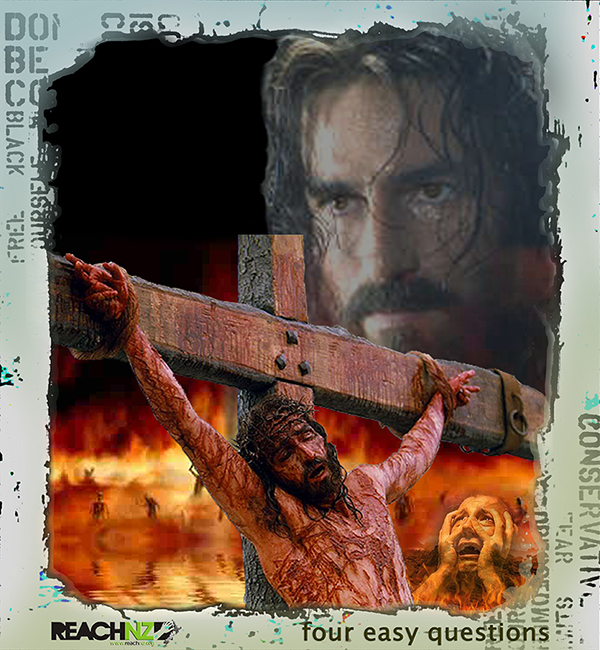
But here is the glorious good news of the Gospel: God loves you deeply and does not want you to perish in Hell or face the Lake of Fire. In His amazing grace, He provided the way of escape. Jesus Christ, the sinless Son of God, took your place on the cross. He was crucified, bearing the full wrath of God for your sins, paying your sin debt in full to satisfy divine justice on behalf of all who believe.
Salvation is not earned by good works or religious efforts—it is a free, undeserved gift from God, received by grace alone, through faith alone, in Christ alone. Trust in Jesus’ finished work: He died for you, was buried, and rose again on the third day, conquering sin, death, and Hell. By believing in Him, you receive forgiveness, righteousness, and the free gift of eternal life.
The moment a sinner believes the Gospel of grace alone, incredible things happen instantly and forever: God immediately seals that believer with the promised Holy Spirit, who becomes the guarantee and down payment of our inheritance and salvation until we fully possess it (Ephesians 1:13-14; 2 Corinthians 1:22). Jesus Himself promises that those who come to Him have eternal life, will never perish, and no one can snatch them out of His hand (John 10:28-29). Nothing—absolutely nothing—can separate us from the love of God that is in Christ Jesus (Romans 8:38-39). He declares us saints (holy ones) forever, positionally perfect in Him, and gives us full assurance of eternal life that can never be lost.
At that very instant of faith, the believer is transferred out of the kingdom of darkness and into the Kingdom of God’s beloved Son (Colossians 1:13). They are born again as a brand-new creation in Christ—the old has passed away, and the new has come (2 Corinthians 5:17; John 3:3). The Holy Spirit enters their heart and life permanently, bringing the assurance that all their sins—past, present, and future—have been forgiven and washed away by the blood of Christ, cleansing them from all unrighteousness (1 John 1:9). They now truly know God personally and begin an intimate relationship with Him as their loving Father. The indwelling Holy Spirit becomes their Teacher, guiding them into all truth and illuminating the Scriptures (John 16:13; 1 Corinthians 2:12).
For all who trust the Gospel of grace alone, the future is infinitely better: you will be with the Lord forever in paradise, in the new heaven and new earth where “He will wipe away every tear from their eyes; and there will no longer be any death; there will no longer be any mourning, or crying, or pain” (Revelation 21:4).
If you’re ready to turn from sin and trust Christ as your Savior today, simply call upon Him in faith. He promises to save you and give you everlasting life.
What do you think? Does this explanation resonate, or do you have questions about original sin or the Gospel? Share in the comments below!
Contact Us

If you have any questions or would like more information, please complete our Contact Form. Copy & paste the name of this blog, The Miracle of the Virgin Birth, then add it to your message subject.
Reach NZ is committed to equipping Kiwis to share this hope through evangelism. Explore our resources and join us in reaching New Zealand with the gospel.
In Christ’s love,
The Reach NZ Ministry Team
www.reachnz.org