
Two opposing messages are preached today: the false gospel of grace plus works and the true gospel of the apostles—grace alone. This is not a minor difference; it determines whether a person receives eternal life or faces eternal destruction.

The apostles’ gospel declares that salvation is entirely by grace alone, through faith alone, in Christ alone. You are not saved by keeping the law, taking sacraments, or doing good works, nor do these things maintain your salvation.
The Bible states plainly, “For by grace you have been saved through faith. And this is not your own doing; it is the gift of God, not a result of works, so that no one may boast” (Ephesians 2:8–9). Salvation depends solely on what Christ has accomplished.
The gospel of grace plus works claims that while Jesus died for your sins, you must also do certain things to be saved or stay saved: be baptised, keep the commandments, take sacraments, or prove your salvation through good works. Some say you must persevere in good works until the end to remain saved (Galatians 3:3). This is not the gospel the apostles preached.
Good works are not the basis of our salvation, but they are the result of it. We are not saved by our good works; rather, we are saved for good works. Ephesians 2:10 explains this clearly: “For we are his workmanship, created in Christ Jesus for good works, which God prepared beforehand, that we should walk in them.” Good works are the evidence that a person has been saved, the fruit that follows genuine faith—not the root or cause of salvation (James 2:17–18).

The Old Covenant law, with its priests and repeated sacrifices, could never fully remove sin and has been made obsolete by the New Covenant.
The law made nothing perfect, but the bringing in of a better hope did (Hebrews 7:19). Jesus Christ offered Himself once for all as the perfect sacrifice: “He has no need, like those high priests, to offer sacrifices daily… he did this once for all when he offered up himself” (Hebrews 7:27). Under the New Covenant, God declares, “I will be merciful toward their iniquities, and I will remember their sins no more” (Hebrews 8:12).
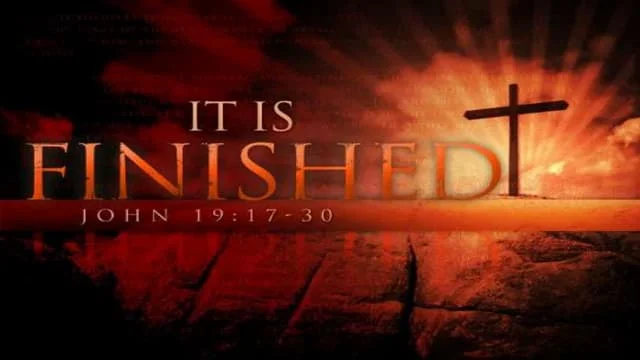
When Jesus declared, “It is finished” (John 19:30), He meant that the work of redemption was completely accomplished. Every sin of every believer was fully paid for on the cross:
“In him we have redemption through his blood, the forgiveness of our trespasses, according to the riches of his grace” (Ephesians 1:7). The resurrection proves this victory: sin and death were defeated, and the debt of sin was paid in full, for Christ “was delivered up for our trespasses and raised for our justification” (Romans 4:25).
A sinner is saved from the lake of fire—eternal, conscious torment in unending punishment—and saved for eternal life with Jesus in heaven. Without Christ, the unbeliever’s destiny is “the lake that burns with fire and sulphur, which is the second death” where “they will be tormented day and night forever and ever” (Revelation 20:10, 14–15). But those who believe are delivered from this wrath and granted everlasting life: “Whoever believes in him should not perish but have eternal life” (John 3:16), dwelling forever in the presence of God.
The way to be saved is simple: “If you confess with your mouth that Jesus is Lord and believe in your heart that God raised him from the dead, you will be saved. For with the heart one believes and is justified, and with the mouth one confesses and is saved” (Romans 10:9–10). Believe that Christ died for your sins, was buried, and rose again, and trust solely in His finished work—not in your own efforts, religious acts, or good works. Salvation is a free gift received by faith alone: “For the wages of sin is death, but the free gift of God is eternal life in Christ Jesus our Lord” (Romans 6:23).

The gospel of grace plus works directs trust to human effort, leaving a person uncertain about salvation. The apostles’ gospel directs all trust to Christ’s completed work, providing full assurance:
“Therefore, since we have been justified by faith, we have peace with God through our Lord Jesus Christ” (Romans 5:1).
If you have been relying on your own works, religious rituals, belonging to a Church, or the ability to maintain your salvation, set those aside today. Salvation is not earned or kept by what you do. Simply believe the gospel: trust that Jesus Christ has fully paid for your sins and secured your salvation by His death and resurrection. Confess Him as Lord and rely wholly on Him. The moment you do, you are saved—delivered forever from the lake of fire and given eternal life in heaven. This is the gospel of grace alone.
Contact Us
If you have any questions or would like more information, please complete our Contact Form. Add the name of this blog, The Apostles Gospel of Grace Alone, then add your message