As believers in Christ, one of the most transformative truths we can grasp is our new identity. This isn’t just a change in behaviour or a fresh start—it’s a complete spiritual rebirth that redefines who we are at the core. The Bible teaches that when we come to faith in Jesus, we become new creations, freed from the old life of sin and empowered to live in righteousness. Let’s explore this step by step, drawing from Scripture to see how God has made us new.
Important Warning:
This teaching is not British Israelism (Anglo-Israelism). British Israelism is a false teaching primarily because it claims the ten tribes of the northern House of Israel were “lost” (completely disappeared and their identity forgotten), then asserts that certain modern nations (especially the British and their descendants) are their literal descendants. Scripture, however, teaches that the ten tribes were dispersed (scattered among the nations) but not lost in the sense of being unknown to God or His people. James addressed his epistle “to the twelve tribes which are scattered abroad” (James 1:1), clearly indicating that he knew where they were and that they remained identifiable and part of God’s concern in the first century. British Israelism’s claim of “lost tribes” becoming hidden ethnic groups in Europe is unbiblical and unsupported. Furthermore, it promotes a false gospel by tying covenant identity, blessings, or status to supposed ethnic/national lineage rather than to faith in Christ alone. This leads to legalism (e.g., insisting on Old Testament laws or Sabbath observance based on alleged heritage) and robs believers of their true identity in Christ. In contrast, the Bible shows that ethnic Israelites from the dispersed tribes—especially those who believed Jesus is the Messiah—became the initial members of the body of Christ, New Covenant Israel. These believing ethnic Israelites (including the Apostles and early disciples) formed its foundation and spread the Gospel worldwide. Jews (from Judah) and Gentiles alike are now grafted into this same New Covenant Israel by faith alone, becoming full heirs without any requirement of physical descent (Romans 11:17-24; Galatians 3:28-29; Ephesians 2:8-9).
The Origin of Sin and Our Need for a Savior

To understand our new identity, we must first look back to humanity’s beginning. God created mankind perfect, in His own image (Genesis 1:26-27). This included giving us free will—the ability to choose.
Without free will, true love isn’t possible. You can’t force someone to love you; it must be a voluntary choice. So, God placed Adam and Eve in the Garden of Eden with one simple command: not to eat from the tree of the knowledge of good and evil, or they would surely die (Genesis 2:16-17). This death wasn’t just physical; it was primarily spiritual—separation from God—and would eventually lead to physical death as well.
Tragically, Eve was deceived by the serpent into eating the fruit, but Adam chose to disobey willingly (Genesis 3:6; 1 Timothy 2:14). Through this one act of disobedience, sin entered the world, corrupting Adam’s body, soul, and spirit, and severing his intimate fellowship with God (Romans 5:12). The Bible explains that because of Adam’s sin, death spread to all humanity. Sin is passed down through the male seed—like a genetic inheritance of corruption. This is why Jesus’ virgin birth was essential (Matthew 1:18-25; Luke 1:34-35). Conceived by the Holy Spirit, Jesus did not inherit Adam’s sinful nature; He was born sinless, qualifying Him to be our perfect Savior.
As a result, every person is born in sin (Psalm 51:5; Romans 3:23). We’re not sinners because we commit sins; we commit sins because we were born sinners. Our actions are the evidence of our inherited sinful condition, not the cause. Think of it like a diseased tree producing bad fruit—the fruit reveals the disease, but it doesn’t create it (Matthew 7:17-18). While we’re not personally responsible for Adam’s original sin, we are accountable for our own choices—whether we remain in that sinful state or turn to Christ for rescue.
This universal need for a Savior underscores why Jesus came: to redeem us from the curse of sin and death (Galatians 3:13). No one can come to Christ on their own; the Father must draw them through the Holy Spirit, convicting them of sin and pointing them to the Gospel (John 6:44). When a person hears the Good News—that Jesus died on the cross in our place, paying our sin debt in full, was buried, and rose again on the third day for our justification (1 Corinthians 15:3-4; Romans 4:25)—they must respond. This involves repentance: a change of mind about sin, agreeing with God about our hopeless condition and need for a Savior. It’s not about cleaning up our lives first; it’s turning to Christ alone, trusting His finished work for salvation (Ephesians 2:8-9).
The Security of Our Salvation and the Impossibility of Losing It

Here’s a liberating truth: Since our sinful status came from Adam’s sin (not our own actions), once we’re saved from its penalty, we can’t become “unsaved” sinners again.
We can’t commit Adam’s original sin—it’s a one-time event in human history. Salvation is eternal because it’s based on Christ’s perfect work, not our performance (Hebrews 7:25; John 10:28-29). If you’ve truly believed, you’re sealed with the Holy Spirit as a guarantee (Ephesians 1:13-14). Nothing can separate you from God’s love (Romans 8:38-39).
From Old Creation to New: Your Transformed Identity
Salvation isn’t a patch on the old life; it’s a total recreation. The Bible contrasts the “old creation” (our fallen state, inherited from Adam) with the “new creation” in Christ (2 Corinthians 5:17).
God doesn’t redeem or fix our fallen cultures—the systems, values, and identities shaped by humanity’s sinful nature. Instead, He saves us from them. Cultures are man-made, rooted in rebellion against God, but in Christ, we’re made entirely new. Our old identity—tied to sin, self, and the world—has been crucified with Christ (Galatians 2:20; Romans 6:6). The old has gone; the new has come.
According to Scripture, being a new creation means a profound transformation at the spiritual level: “Therefore, if anyone is in Christ, he is a new creation; old things have passed away; behold, all things have become new” (2 Corinthians 5:17). Characteristics include receiving a new heart and spirit (Ezekiel 36:26), being created in righteousness and true holiness after the image of God (Ephesians 4:24; Colossians 3:10), and becoming partakers of the divine nature, escaping the corruption of the world (2 Peter 1:4). A believer’s identity in Christ is multifaceted: We are children of God (John 1:12; Romans 8:16), saints (Ephesians 1:1), the righteousness of God in Him (2 Corinthians 5:21), more than conquerors through Him who loved us (Romans 8:37), seated with Christ in heavenly places (Ephesians 2:6), ambassadors for Christ (2 Corinthians 5:20), and temples of the Holy Spirit (1 Corinthians 6:19). This identity is positional—it’s who we are by God’s declaration, not by our feelings or performance.
When you believe and obey the Gospel, you’re spiritually translated out of the kingdom of darkness (where you were born, under sin’s dominion) and born again into the Kingdom of God’s dear Son (Colossians 1:13; John 3:3-7). You’re no longer a sinner controlled by sin’s power but a saint—a holy one—of the Most High God (1 Corinthians 1:2; Romans 1:7). You receive a new nature, oriented toward God’s will, with the Holy Spirit indwelling you (Ezekiel 36:26-27; 2 Peter 1:4). This new identity means you’re adopted as God’s child (Romans 8:15), righteous in His sight (2 Corinthians 5:21), and complete in Christ (Colossians 2:10).
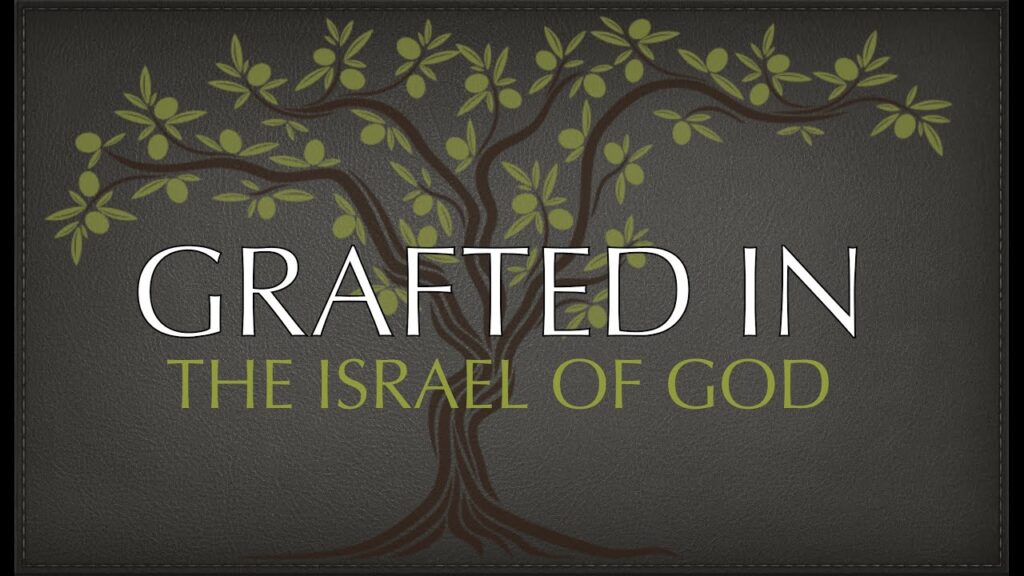
Furthermore, this new birth grafts you into the House of Israel as part of God’s covenant people. In Romans 11:17-24, Paul uses the metaphor of an olive tree to explain this profound union.
The olive tree represents God’s covenant promises, rooted in Israel, with Christ as the central “root” (Romans 11:16-18). Under the Old Covenant, Israel was God’s chosen nation, but many Jews (the natural olive branches) were “cut off” because of unbelief in rejecting Jesus as Messiah (Romans 11:20). However, a remnant of believing ethnic Israelites from the House of Israel (the northern kingdom), including the Apostles (except Judas), continued as the faithful branches. These Apostles were mostly Galileans—natives of Galilee in the northern territories originally allotted to tribes like Zebulun, Naphtali, Asher, Issachar, and others (Matthew 4:12-16; Acts 1:11; 2:7). Galilee was part of the former Northern Kingdom of Israel, scattered by Assyria centuries earlier, though some descendants remained or resettled there. In contrast, Judas Iscariot (meaning “man of Kerioth”) was from Kerioth, a town in southern Judea (Joshua 15:25), representing the House of Judah (the southern kingdom). This distinction is significant in light of Jeremiah’s prophecy.
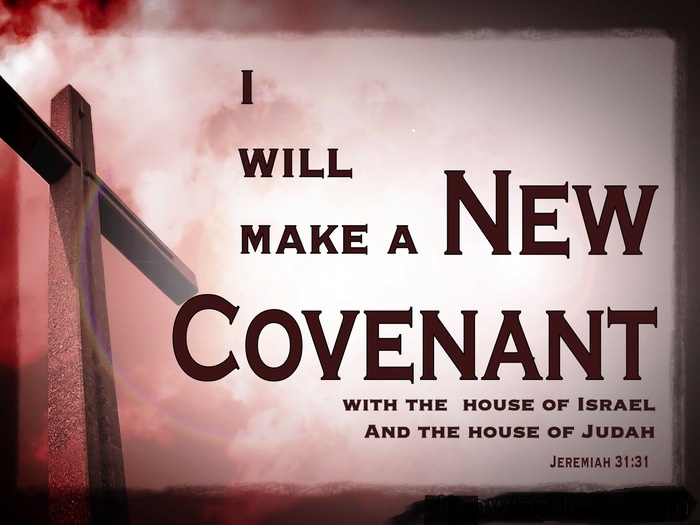
In Jeremiah 31:31-34, God declares: “Behold, the days are coming… when I will make a new covenant with the house of Israel and with the house of Judah.”
This prophecy explicitly addresses both houses separately—the divided kingdoms after Solomon: the northern House of Israel (ten tribes) and the southern House of Judah (primarily Judah and Benjamin). The new covenant is not like the old Mosaic one they broke; it involves God writing the law of Christ on their hearts, forgiving their sins, and enabling true knowledge of Him.
God continued directly from the Old Covenant into the New Covenant with these ethnic Israelites—particularly the Apostles—who formed the foundation of New Covenant Israel. The ten tribes were dispersed (not “lost” in the sense of being unknown to God or His people), as evidenced by James addressing his epistle “to the twelve tribes which are scattered abroad” (James 1:1), showing he knew where they were and that they remained part of God’s concern in the first century. These ethnic Israelites from the various tribes were the ones who first believed Jesus is the Messiah and became the body of Christ—New Covenant Israel. They were the initial members who spread the Gospel throughout the world (Acts 1:8; 8:1-4; Romans 1:16). Through their faithful witness, New Covenant Israel was established and expanded, fulfilling God’s promises to the patriarchs. Jews (from Judah) and Gentiles (wild olive branches) alike are now grafted into this same olive tree by faith in Christ (Romans 11:17-24). This is not about ethnic superiority or hidden lineages (as in British Israelism), but about God’s sovereign continuation of His covenant people through the believing remnant of Israel, into which all believers—regardless of background—are incorporated by grace through faith.
The Apostles (faithful Israelites from the northern heritage) fulfilled this prophecy by transitioning from the Old Covenant into the New Covenant through their faith in Jesus as Messiah. They formed the foundation of New Covenant Israel, based on better promises (Hebrews 8:6-13). Judas, however, represents the House of Judah’s prophesied unbelief: many from Judah rejected Jesus, leading to their being “broken off” (Romans 11:17-20) and scattered among the nations (fulfilled in the Roman destruction of Jerusalem in AD 70 and the diaspora). Yet prophecy also foretells a future regathering of Judah (and all Israel), as seen in the modern restoration of the nation in 1948 and ongoing fulfilments.
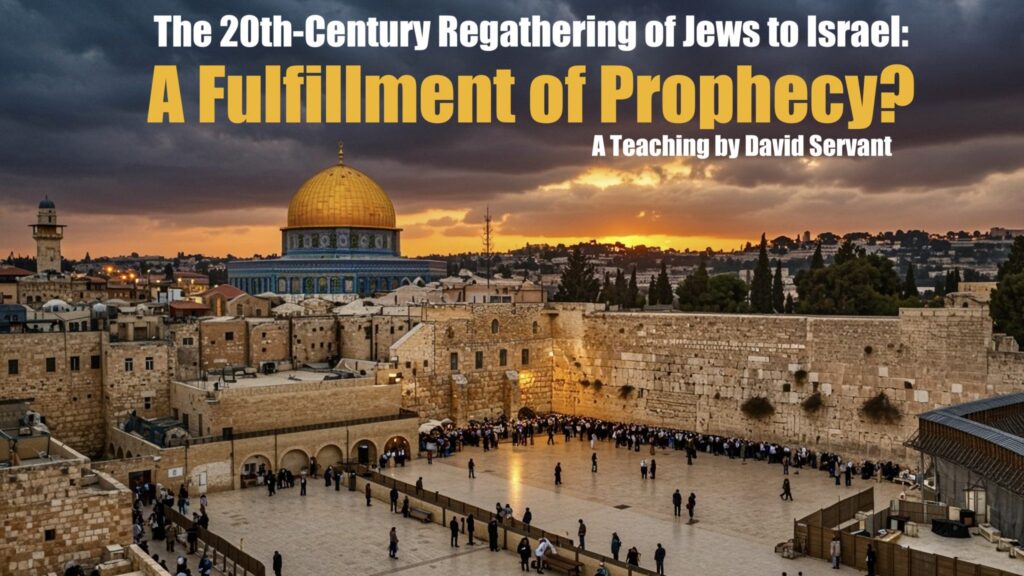
The regathering of the Jewish people to the land in 1948, culminating in the establishment of the modern state of Israel, is a remarkable fulfilment of biblical prophecy (e.g., Ezekiel 36:24; Isaiah 11:11-12; Zechariah 8:7-8).
However, this physical regathering occurred not because of national obedience or faithfulness on the part of the Jewish people, but because God is faithful to His irrevocable promises to Abraham, Isaac, and Jacob regarding the land as an everlasting possession (Genesis 17:8; Romans 11:29). God sovereignly acts to preserve and regather His people for the sake of His name and covenant faithfulness, even amid unbelief (Ezekiel 36:22-24).
While this marks a significant step in prophecy, the Jews as a nation will not be fully restored to God—spiritually reconciled and saved as a people—until they look upon Him whom they pierced, as prophesied in Zechariah 12:10: “And I will pour out on the house of David and on the inhabitants of Jerusalem the Spirit of grace and supplication; then they will look on Me whom they pierced. Yes, they will mourn for Him as one mourns for his only son.” This national recognition and mourning for the pierced Messiah (Jesus) will occur at Christ’s second coming, leading to the fulfilment of “all Israel will be saved” in Romans 11:26—a future corporate turning to Christ, removing ungodliness from Jacob. This event aligns with end-times prophecies where a remnant turns in faith amid tribulation, culminating in national deliverance and blessing.
Yet individual Jews (like any person) can be grafted back into the olive tree right now through the new birth—by believing the Gospel and trusting in Jesus as Messiah. Faith, not ethnicity or national status, brings personal salvation and inclusion in New Covenant Israel.
By keeping the two houses distinct in Scripture, we rightly divide the word of God (2 Timothy 2:15). Blurring them causes misinterpretation of prophecies—such as confusing promises to the northern House of Israel (often about restoration after scattering) with those to Judah (about judgment and regathering). This separation helps us see God’s consistent plan: He began with His covenant people (Old Covenant Israel, divided into two houses) and finishes with His covenant people (New Covenant Israel, unified in Christ). There is no separate “Gentile church” nor has God replaced Israel with a Gentile entity. Instead, He expands and fulfils His promises to Israel through the New Covenant, grafting in believing Gentiles while preserving the identity of His people.
Unfortunately, much of the modern Church has missed the significance of the 12 tribes of Israel and the distinction between the two kingdoms (the northern House of Israel and the southern House of Judah), often conflating all of Israel with “just the Jews” (primarily descendants of Judah). This oversight stems from historical factors, such as the loss of the northern tribes’ identity after their Assyrian exile (2 Kings 17:5-6), and a focus on Judah’s return from Babylonian captivity. As a result, many teachings overlook the biblical emphasis on the full 12 tribes and the separate prophecies for each house (e.g., Hosea for Israel, Jeremiah for Judah). This misinterpretation has led to a partial blindness about God’s covenant people, fostering ideas like replacement theology (where the Church replaces Israel) or a separate “Gentile Church” apart from Israel’s promises. It also distorts end-time prophecies, such as the regathering of all Israel (Ezekiel 37:15-28; Romans 11:25-26), the role of the 144,000 from the 12 tribes (Revelation 7:4-8), and the New Jerusalem with gates named after the 12 tribes (Revelation 21:12). By collapsing Israel’s identity into “the Jews,” the Church misses the fullness of our grafted-in status as part of New Covenant Israel, diminishing our understanding of God’s unchanging covenants (Romans 11:29) and our shared inheritance as Abraham’s seed (Galatians 3:29). Recognising this restores a biblical view of our identity as God’s covenant people, unified in Christ with both Jew and Gentile.
This understanding deepens our new identity in Christ: We are grafted into God’s covenant people—New Covenant Israel—not as a replacement but as participants in the olive tree rooted in God’s promises to Abraham, Isaac, Jacob, and the patriarchs (Romans 11:17-24; Galatians 3:29). All believers become part of this unified covenant household, heirs to the promises originally given to Israel.
Gentiles, described as “wild olive branches,” were once aliens to these covenants (Ephesians 2:12). But when a sinner—Jew or Gentile—believes the Gospel, they are grafted into this olive tree through the new birth (Romans 11:17). This isn’t creating a separate “Gentile church” alongside Israel; there’s no such thing as a distinct Gentile church or “Israel plus the Church.” Instead, the Old Covenant Israel transitions and continues under the New Covenant, expanded to include all who believe. The Apostles, as believing Israelites, carried forward God’s plan, establishing the Church as the fulfilment of New Covenant Israel (Galatians 6:16; Ephesians 2:19-22). In Christ, the dividing wall between Jew and Gentile is broken down, creating “one new man” out of the two (Ephesians 2:14-15). All believers—regardless of background—become part of this New Covenant Israel, fellow citizens in God’s household, and partakers of all the spiritual promises and blessings originally given to Israel, such as adoption, glory, covenants, and inheritance (Romans 9:4; Ephesians 3:6; Galatians 3:29). This grafting is by faith alone, making us Abraham’s seed and heirs according to the promise (Galatians 3:7-9, 29).
The Process of Sanctification: Renewing Your Mind
While your spirit is instantly reborn, your soul (mind, will, emotions) needs ongoing renewal. This is sanctification—the present-tense aspect of salvation where you’re being saved from sin’s power in daily life (Philippians 2:12-13).
It’s like reformatting a computer: The old corrupted program (sinful habits and thinking) is deleted, and a new operating system is installed. But traces of the old patterns linger in your thinking, so you must learn to operate the new one. The Holy Spirit is your Teacher, guiding you through Scripture to renew your mind and conform you to Christ’s image (Romans 12:2; Ephesians 4:22-24; John 14:26). As you yield to Him, studying God’s Word and praying, old ways fade, and godly habits grow.
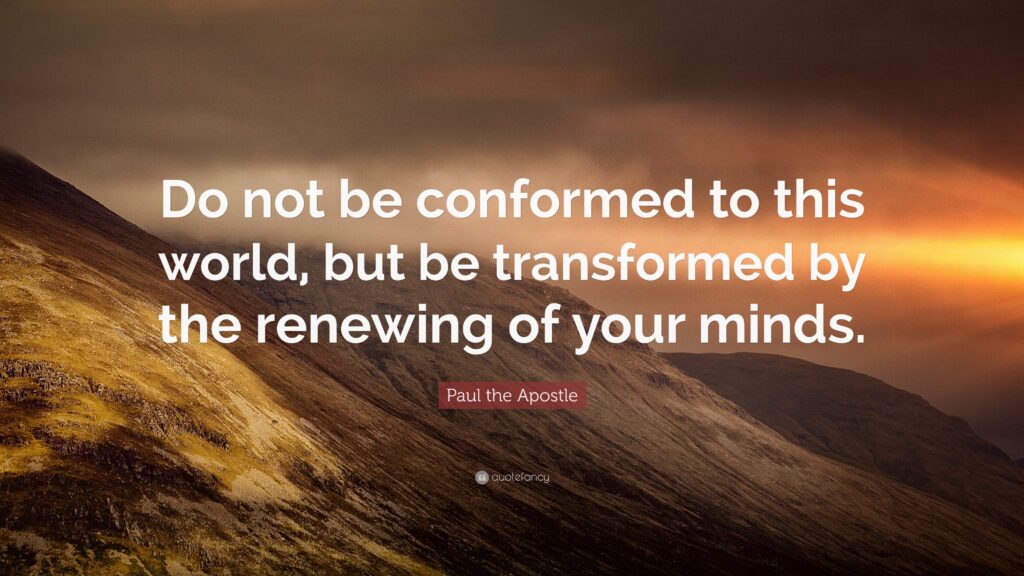
The necessity of renewing the mind stems from the fact that while our spirit is made new at salvation, our soul remains influenced by pre-salvation habits and worldly thinking. Scripture commands: “Do not be conformed to this world, but be transformed by the renewing of your mind, that you may prove what is that good and acceptable and perfect will of God” (Romans 12:2). Without this renewal, we cannot fully live out or experience our new identity in Christ—we’ll default to old patterns, living below our spiritual privileges, and failing to discern God’s will. Renewal aligns our thinking with God’s truth about who we are (e.g., reckoning ourselves dead to sin but alive to God in Christ, Romans 6:11), empowering victory over sin, fruitful living, and conformity to Christ’s image (Romans 8:29). It’s essential for proving and enjoying the reality of what God has already made us in Christ.
This process is vividly illustrated in Romans 7, where Paul describes the internal battle every believer faces between the old fallen nature (the “flesh”) and the new nature received at the new birth. In verses 14-25, Paul confesses that even as a mature Christian, he experiences a war within: “For I do not do the good I want to do, but the evil I do not want to do—this I keep on doing” (Romans 7:19). The old nature, though crucified with Christ (Romans 6:6), leaves behind ingrained patterns in our thinking and habits—residual effects of years lived under sin’s influence. These patterns create a tug-of-war: The new inner man delights in God’s law (Romans 7:22), but the flesh pulls toward sin (Romans 7:23). This struggle shows our desperate need for mind transformation—to align our thoughts with the new mind we’ve received in Christ (1 Corinthians 2:16).
Paul’s cry in verse 24 captures the anguish of this conflict: “O wretched man that I am! Who will deliver me from this body of death?” But immediately comes the triumphant answer in verse 25: “Thanks be to God through Jesus Christ our Lord!” This is the key point of deliverance. The struggle in Romans 7 is real and ongoing in the believer’s experience, but it is not the final word. There is deliverance from the dominion and power of the old nature—available right now—through Jesus Christ our Lord. This deliverance does not come from trying harder in the flesh or from some new technique, but from the revelation of our true identity in Christ. When we see and reckon ourselves to be who God says we are—crucified with Christ, dead to sin, alive to God, and no longer slaves to sin (Romans 6:6-11)—the Holy Spirit applies this truth to our minds and hearts. The revelation of our position in Christ (dead to the law, free from condemnation, indwelt by the Spirit—Romans 8:1-4) breaks the power of those old patterns and enables us to walk in victory. Romans 7 shows the problem; Romans 8 shows the solution: life in the Spirit through the knowledge of who we are in Christ.
Importantly, this battle is not a work to earn or maintain salvation. Our salvation is fully secured by Christ’s finished work on the cross—we are justified by faith alone, and our position in Christ is unchangeable (Romans 5:1; Hebrews 10:14). Instead, Romans 7 leads to the revelation in Romans 8:1—”There is therefore now no condemnation for those who are in Christ Jesus.” Through Jesus our Lord, we gain the victory by walking in the Spirit, not the flesh (Romans 8:4). This renewal comes as we receive revelation from God’s Word, allowing the Holy Spirit to reprogram our minds to match our new identity. By meditating on who we are in Christ—dead to sin, alive to God (Romans 6:11)—we overcome those ingrained patterns, experiencing freedom and fruitfulness in our daily walk.
The Three Tenses of Salvation

Salvation isn’t a one-time event but has three dimensions, all beginning the moment you’re born again and receive eternal life (John 5:24):
- Justification (Past Tense): Your spirit is saved from the penalty of Adam’s sin—forever. This is a one-time declaration where God sees you as righteous through Christ’s blood (Romans 5:1; Titus 3:7). It’s done; you’re forgiven and at peace with God.
- Sanctification (Present Tense): Your soul is being saved from the power of sin throughout your earthly life. This is the ongoing process we just discussed, where you grow in holiness (1 Thessalonians 5:23; Hebrews 12:14).
- Glorification (Future Tense): You’ll be saved from the presence of sin when your body dies or Christ returns. You’ll receive a new, sinless, eternal body, free from all corruption (Romans 8:23; 1 Corinthians 15:51-53; Philippians 3:20-21).
Understanding these tenses is crucial for interpreting Scripture correctly. Without them, we might misapply verses—confusing justification (which is complete) with sanctification (which is progressive)—leading to false doctrines like losing salvation or legalism. This robs us of God’s intended blessings, like assurance and joy (1 John 5:13).
Why Understanding Your New Identity Fuels Maturity

Failing to grasp this new identity stalls spiritual growth. We might live like defeated sinners instead of victorious saints, relying on self-effort rather than Christ’s power (Galatians 3:3).
The Apostle John outlines three stages of Christian maturity in 1 John 2:12-14, like a family’s progression:
- Little Children: Forgiven for His name’s sake, they know the Father intimately and have confidence in Him. This is the foundation—assurance of salvation and basic relationship with God.
- Young Men: They have overcome the evil one, are strong, and the Word of God abides in them. Young men are not merely battling for victory over sin and the enemy—they are actively overcoming it. They have moved from struggle to triumph, experiencing consistent victory in their walk. This overcoming is accomplished exactly as Revelation 12:11 describes: “And they overcame him [the accuser, Satan] by the blood of the Lamb and by the word of their testimony, and they did not love their lives to the death.” The young men stand firm because they rest fully in the finished work of Christ’s blood (which cleanses from all sin and defeats every accusation) and boldly proclaim the word of their testimony—the truth of what Jesus has done for them and who they are in Him. The abiding Word of God empowers them to resist the devil, and he flees (James 4:7). Here, believers grow in victory over sin, building strength through Scripture and spiritual warfare.
- Fathers: They know Him who is from the beginning—deep, mature intimacy with God’s eternal nature, marked by wisdom and fruitfulness.
These three stages of spiritual growth are not primarily determined by the passage of time or by how long someone has been a Christian. They are determined by progressive revelation from God—deeper unveiling of our identity in Christ and corresponding renewal of the mind (Romans 12:2; Ephesians 1:17-18). Each stage represents a greater experiential knowledge of who we are in Him, received through the Holy Spirit illuminating Scripture. Maturity advances as God reveals more of Christ’s finished work and our union with Him, transforming how we think, believe, and live.
- Little children rest in the basic revelation of forgiveness and adoption—knowing God as Father and having confidence in His love.
- Young men receive revelation of victory over the enemy and the power of God’s abiding Word, enabling them to stand strong against temptation.
- Fathers receive the deepest revelation: intimate, experiential knowledge of the eternal God (“Him who is from the beginning”), leading to spiritual reproduction and mentoring.
Because maturity is revelation-based rather than time-based or effort-based, it is entirely possible—and sadly common—for many believers to remain “little children” throughout their entire Christian life. They may have assurance of salvation and enjoy a personal relationship with God, but they never press on to receive the fuller revelations needed to overcome the evil one consistently or to know God in profound, foundational ways. Without yielding to the Holy Spirit’s teaching through diligent study of the Word, prayer, and obedience, the mind remains unrenewed in key areas, and deeper stages of growth are not entered. Growth is not automatic with age; it requires hunger for God’s revelation and cooperation with the Spirit.
To grow through these stages, we need: For little children, emphasis on forgiveness and knowing God personally (e.g., prayer, basic Bible study). For young men, overcoming temptation through God’s Word abiding richly (e.g., memorization, application, community). For fathers, a profound grasp of God’s character from the beginning, leading to mentoring others.
Compare this to Jesus’ Parable of the Sower (Matthew 13:3-23). The seed (God’s Word) falls on four soils:
- The first three soils (pathway, rocky, thorny) produce no lasting fruit and represent the unsaved—those who hear the Word but do not truly receive it with understanding and perseverance. The pathway soil has the Word snatched away by Satan before it takes root; the rocky soil receives it with joy but falls away under persecution or tribulation because it has no deep root; the thorny soil hears but is choked by worldly cares, deceitfulness of riches, and desires, becoming unfruitful. These depict people who may hear the Gospel and even respond superficially, but they never produce genuine, enduring fruit that evidences true salvation.
- The good soil produces fruit: some 30-fold (little children, basic assurance and growth), some 60-fold (young men, overcoming and strength), some 100-fold (fathers, deep maturity and multiplication). This represents true believers who hear, understand, accept, and persevere in the Word, yielding lasting spiritual fruit.
This distinction between fruitful and unfruitful responses is further illuminated by comparing it to the Parable of the Wheat and the Tares (Matthew 13:24-30, 36-43). In that parable, the field is the world, the good seed (wheat) are the sons of the kingdom (true believers), sown by the Son of Man (Jesus). The tares (weeds) are the sons of the evil one, sown by the devil among the wheat. The tares grow alongside the wheat, looking similar until the fruit appears—the wheat produces good grain, while the tares produce nothing of value and are ultimately burned. The first three soils in the Parable of the Sower correspond to the tares: they may appear religious or responsive at first, but they produce no true fruit because they are not genuinely born again. In contrast, the good soil is like the wheat—true believers who receive the seed deeply, grow, and bear fruit that proves their identity as children of the kingdom. Both parables emphasise that in this age, true believers (wheat/good soil) coexist with false professors or unbelievers (tares/unfruitful soils) in the world and even in the visible church, but at the harvest (judgment), God will separate them clearly: the wheat gathered into His barn (eternal life), the tares bound for burning (judgment).
All true believers produce some fruit, but the degree varies with maturity. The unsaved produce none.
Tying It All Together: Growing in Grace Through Your New Identity

Understanding these principles—our fallen origin, the miracle of rebirth, the security and process of salvation, and stages of growth—illuminates our new identity in Christ.
It helps us discern where we are spiritually: Are you a “little child” needing reassurance? A “young man” overcoming the enemy? Or a “father” pursuing deeper knowledge? This awareness empowers us to grow in grace and faith (2 Peter 3:18), cooperating with the Holy Spirit rather than striving in the flesh. You’re not who you used to be; you’re a new creation, seated with Christ (Ephesians 2:6), called to live out this reality daily. Embrace it, and watch God transform you from glory to glory (2 Corinthians 3:18).
Contact Us

If you have any questions or would like more information, please complete our Contact Form. Copy and paste the name of this blog, Understanding Your New Identity in Christ, then add your message
Reach NZ is committed to equipping Kiwis to share this hope through evangelism. Explore our resources (see category list) and join us in reaching New Zealand with the gospel.
In Christ’s love,
The Reach NZ Ministry Team
www.reachnz.org