
Introduction: The Most Important Truth – Any Other Gospel Is False and Produces Counterfeit Christianity
In a world filled with religious traditions and doctrines developed over centuries, the single most critical truth we must recover is this: Any gospel other than the one Jesus Christ and His Apostles preached in the first century is a false gospel. It is not a minor variation or a harmless difference of emphasis. According to the Apostle Paul, it is a perversion that produces false converts and builds a counterfeit Christian church—people who believe they are saved but remain under the curse of sin, never truly born again, never justified, and never possessing the life of Christ.
This is not about defending Protestantism, Catholicism, Orthodoxy, Armenian Apostolic teaching, or any later denomination. It is about returning to the pure, unadulterated gospel delivered once for all in the New Testament Scriptures. When churches add human works, sacraments, ongoing cooperation, or any other requirement to the finished work of Christ on the cross and His resurrection, they preach “another gospel” (Galatians 1:6–9). Paul declares that gospel accursed (anathema), and those who embrace it are left spiritually dead—still bearing the curse of Adam, never having received the free gift of justification by faith alone.
In this blog, we will let Scripture speak plainly, without post-apostolic interpretations, church councils, or denominational traditions. We will see how the teachings of the Armenian Apostolic Church (which closely parallel Roman Catholic and Eastern Orthodox views) depart from the apostolic message by adding to Christ’s finished work. The result is not a slightly different version of Christianity—it is a false gospel that cannot save, producing only counterfeit converts and a counterfeit church.
The Apostolic Gospel: Salvation by Grace Through Faith in Christ’s Finished Work Alone
The gospel Jesus and the Apostles preached is breathtakingly simple and complete: Sinners are justified, born again, and saved entirely by God’s grace, received through faith in Jesus Christ’s death for our sins and His resurrection for our justification—nothing added from ourselves.
Jesus taught: “For God so loved the world, that He gave His only Son, so that everyone who believes in Him will not perish, but have eternal life. For God did not send the Son into the world to judge the world, but so that the world might be saved through Him. The one who believes in Him is not judged; the one who does not believe has been judged already, because he has not believed in the name of the only Son of God” (John 3:16-18 NASB). Eternal life comes through believing in the Son—full stop.
Paul declares: “But now apart from the Law the righteousness of God has been revealed, being witnessed by the Law and the Prophets, but it is the righteousness of God through faith in Jesus Christ for all those who believe; for there is no distinction, for all have sinned and fall short of the glory of God, being justified as a gift by His grace through the redemption which is in Christ Jesus… For we maintain that a person is justified by faith apart from works of the Law” (Romans 3:21-28 NASB, abbreviated for flow). Justification is free, by grace, through faith—excluding all human boasting or merit.
“For by grace you have been saved through faith; and this is not of yourselves, it is the gift of God; not a result of works, so that no one may boast” (Ephesians 2:8-9 NASB). Salvation is a gift. Christ’s work is finished: “Therefore when Jesus had received the sour wine, He said, ‘It is finished!’ And He bowed His head and gave up His spirit” (John 19:30 NASB). His blood justifies us: “But God demonstrates His own love toward us, in that while we were still sinners, Christ died for us. Much more then, having now been justified by His blood, we shall be saved from the wrath of God through Him” (Romans 5:8-9 NASB), and His resurrection secures our righteousness: “He who was delivered over because of our wrongdoings, and was raised because of our justification” (Romans 4:25 NASB).
When the jailer asked, “Sirs, what must I do to be saved?” the Apostles answered: “They said, ‘Believe in the Lord Jesus, and you will be saved, you and your household’” (Acts 16:30-31 NASB). Faith alone—no rituals, no works, no sacraments added.
How a False Gospel Produces False Converts: The Parable of the Tares Among the Wheat
A false gospel produces false converts by sowing counterfeit “believers” who appear outwardly similar to true Christians but lack genuine spiritual life. Jesus illustrated this powerfully in the Parable of the Tares Among the Wheat (Matthew 13:24-30, 36-43 NASB).
Jesus said: “The kingdom of heaven is like a man who sowed good seed in his field. But while his men were sleeping, his enemy came and sowed weeds [tares] among the wheat, and left. And when the wheat sprouted and bore grain, then the weeds also became evident… The slaves of the landowner came and said to him, ‘Sir, did you not sow good seed in your field? How then does it have weeds?’ And he said to them, ‘An enemy has done this!’… But he said, ‘No; otherwise while you are gathering up the weeds, you may uproot the wheat with them. Allow both to grow together until the harvest; and at the time of the harvest I will say to the reapers, “First gather up the weeds and bind them in bundles to burn them up; but gather the wheat into my barn”’” (Matthew 13:24-30 NASB, abbreviated).
Later, Jesus explained: “The one who sows the good seed is the Son of Man, and the field is the world; and as for the good seed, these are the sons of the kingdom; and the weeds are the sons of the evil one; and the enemy who sowed them is the devil… The harvest is the end of the age; and the reapers are angels. So just as the weeds are gathered up and burned with fire, so shall it be at the end of the age” (Matthew 13:37-42 NASB, abbreviated).
In this parable, the “good seed” represents true believers planted by Christ, while the “tares” (weeds that look like wheat when young but are poisonous) represent false converts planted by the devil. A false gospel—by adding works, sacraments, or human effort to faith—creates an environment where people can profess faith, participate in religious activities, and appear as part of the church, yet never be truly regenerated. They grow alongside genuine believers until the final judgment, when their lack of true fruit and root in Christ is revealed. They were never saved; they were counterfeit from the start. This is why a false gospel not only fails to save but actively produces a mixed multitude of true wheat and deceptive tares within the visible church.
The Role of Good Works: Evidence of Salvation, Not the Cause
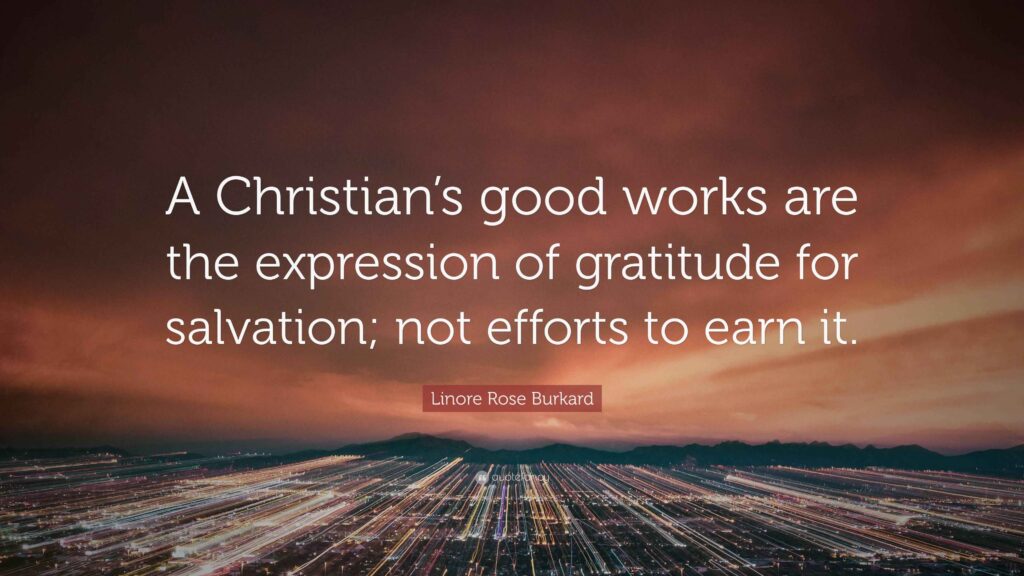
While we are not saved by our good works, sacraments, or law-keeping—these cannot contribute to our justification or eternal life—they serve as the evidence that we have been saved by grace alone through faith in Christ’s finished work.
Salvation is a gift from God, not a reward for our behaviour or efforts (Ephesians 2:8-9 NASB, as cited above). However, once saved, true faith naturally produces good works as the fruit of the Holy Spirit’s indwelling presence, demonstrating that a genuine transformation has occurred.
Scripture makes this clear in Ephesians 2:10 NASB: “For we are His workmanship, created in Christ Jesus for good works, which God prepared beforehand so that we would walk in them.” These good works are not the cause of our salvation but the result—prepared by God before the foundation of the world for those who are already His children through faith. They flow from our new identity in Christ, empowered by the Spirit, rather than from human effort or religious rituals.
Importantly, the fruit from a tree that has just been planted is not immediately seen. Some trees produce fruit the next season, while others can take many seasons before they bear fruit. In the same way, genuine believers may show varying timelines for visible evidence of salvation. New converts might start with basic obedience and growth, while others take longer to manifest the fruit of the Spirit as they mature. The absence of immediate fruit does not disprove genuine salvation (as long as faith in Christ is present), but persistent lack of fruit over time calls the reality of faith into question (James 2:17-18 NASB: “Even so faith, if it has no works, is dead, being by itself. But someone may well say, ‘You have faith and I have works; show me your faith without the works, and I will show you my faith from my works’”.
The importance of good works as evidence of salvation is vividly illustrated in 1 Corinthians 3, where Paul describes the judgment of believers’ works—not their salvation itself. In 1 Corinthians 3:10-15 NASB: “According to the grace of God which was given to me, like a wise master builder I laid a foundation, and another is building on it. But each person must be careful how he builds on it. For no one can lay a foundation other than the one which is laid, which is Jesus Christ. Now if anyone builds on the foundation with gold, silver, precious stones, wood, hay, or straw, each one’s work will become evident; for the day will show it because it is to be revealed with fire, and the fire itself will test the quality of each one’s work. If anyone’s work which he has built on it remains, he will receive a reward. If anyone’s work is burned up, he will suffer loss; but he himself will be saved, yet only as through fire.”
Here, the foundation is Christ alone, laid by grace through faith. The works built upon it represent how believers live out their faith. Paul distinguishes between works of enduring quality (gold, silver, precious stones)—those done in the power of the Spirit, aligned with God’s will, such as loving others, sharing the gospel, and serving humbly—and works of lesser or no value (wood, hay, straw), which are works of the flesh, driven by selfish motives, human pride, or worldly pursuits that do not glorify God. Works of the flesh produce nothing lasting and will be consumed by the fire of judgment, while works of the Spirit endure and bring reward.
Importantly, this judgment is of works, not salvation. All believers will stand before Christ’s judgment seat (2 Corinthians 5:10 NASB: “For we must all appear before the judgment seat of Christ, so that each one may receive compensation for his deeds done through the body, in accordance with what he has done, whether good or bad”), where their deeds—good or bad—will be evaluated and rewarded accordingly. Some believers, whose works are mostly of the flesh and burn up, will escape this life with only their salvation, “yet only as through fire,” suffering loss but still saved because their foundation is Christ. Others, who faithfully walk in the good works God prepared, building with Spirit-empowered deeds, will receive great eternal rewards—crowns, commendation, and inheritance in the kingdom (e.g., Matthew 25:21 NASB: “His master said to him, ‘Well done, good and faithful slave. You were faithful with a few things, I will put you in charge of many things; enter the joy of your master’”).
Thus, while our good works do not save us from our sin—they cannot atone or justify, as only Christ’s finished work does—they are rewarded in eternity as evidence of a living faith. Salvation remains a free gift, received by faith alone, but a transformed life bears fruit that honors God and stores up treasure in heaven.
The Stages of Christian Maturity and the Parable of the Sower
Scripture also describes stages of Christian maturity among true believers. The Apostle John addresses believers in three groups in 1 John 2:12-14 NASB: “I am writing to you, little children, because your sins have been forgiven you for His name’s sake. I am writing to you, fathers, because you know Him who has been from the beginning.
I am writing to you, young men, because you have overcome the evil one… I have written to you, children, because you know the Father. I have written to you, fathers, because you know Him who has been from the beginning. I have written to you, young men, because you are strong, and the word of God remains in you, and you have overcome the evil one.”
These represent progressive stages:
- Little children: New believers whose sins are forgiven and who know the Father in a basic, relational way.
- Young men: Those who have grown stronger in the Word, overcoming the evil one through spiritual strength and victory.
- Fathers: The most mature, who have deep, longstanding knowledge of God (“Him who has been from the beginning”).
All are genuine believers, but they vary in maturity and fruitfulness over time.
This aligns with Jesus’ Parable of the Sower (Matthew 13:1-23; Mark 4:1-20 NASB), where the seed (the word of the kingdom) falls on different soils. The first three soils produce nothing lasting:
- Path: Seed snatched away (no understanding).
- Rocky ground: Temporary joy but no root (falls away in trial).
- Thorny ground: Choked by worries, riches, pleasures (no maturity).
These represent hearers who never truly receive the word with saving faith—they are never genuinely born again, producing no fruit.
But the fourth soil—the good soil—produces fruit in every case: “And others fell on the good soil and yielded a crop, some a hundred times as much, some sixty, and some thirty” (Matthew 13:8 NASB; see also v. 23: “the one sown on the good soil, this is the one who hears the word and understands it, who indeed bears fruit and produces, some a hundred times as much, some sixty, some thirty”). All the seed in good soil produces something because these are genuinely born-again believers—the word takes root, they understand and persevere.
The varying yields (30-fold, 60-fold, 100-fold) correspond to degrees of fruitfulness tied to maturity:
- 30-fold: Little children—basic fruit from new life.
- 60-fold: Young men—greater fruit from growth and overcoming.
- 100-fold: Fathers—abundant fruit from deep maturity and long faithfulness.
Every true believer bears some fruit, though the amount varies by God’s grace, time, and obedience. The key is that genuine salvation always results in fruit over time, distinguishing true converts from false ones.
False Gospels
These traditions teach a synergistic salvation: God’s grace begins the process, but humans must cooperate through sacraments (especially baptism for regeneration), good works, repentance, and ongoing faithfulness to receive, maintain, and complete salvation.
Baptism is presented as the means of being born again and receiving forgiveness—not as an act following faith and salvation. The Eucharist, confession, and other rites are required channels of grace for ongoing justification and perseverance.
These additions are absent from the apostolic gospel presentations in Scripture. Baptism in the New Testament follows belief: “As they went along the road they came to some water; and the eunuch *said, ‘Look! Water! What prevents me from being baptized?’ … And he ordered that the chariot stop; and they both went down into the water, Philip as well as the eunuch, and he baptized him” (Acts 8:36, 38 NASB, abbreviated). “So then, those who had received his word were baptized; and that day there were added about three thousand souls” (Acts 2:41 NASB). Works are the fruit of salvation, not part of receiving it (Ephesians 2:10). We are “complete in Him”: “and in Him you have been made complete, and He is the head over all rule and authority” (Colossians 2:10 NASB)—no additional rites or human cooperation needed to make Christ’s work effective.
By requiring these elements, these teachings imply that Christ’s finished work on the cross and His resurrection are insufficient without our contribution. This is precisely what Paul condemns as “another gospel.”
Paul’s Warning: Another Gospel Is Anathema – It Produces False Converts and a Counterfeit Church

Paul’s words in Galatians 1:6–9 are the clearest and most severe warning in Scripture:
“I am amazed that you are so quickly deserting Him who called you by the grace of Christ, for a different gospel; which is really not another; only there are some who are disturbing you and want to distort the gospel of Christ.
But even if we, or an angel from heaven, should preach to you a gospel contrary to what we have preached to you, he is to be accursed! As we have said before, so I say again now, if any man is preaching to you a gospel contrary to what you received, he is to be accursed!” (Galatians 1:6-9 NASB).
The Galatians were adding law-keeping and circumcision to faith. Paul calls it a perversion. Adding sacraments, human cooperation, or works to Christ’s finished work is the same kind of perversion. Paul’s verdict is absolute: such a message is accursed. Those who preach it and those who embrace it stand under divine judgment.
Most importantly, this false gospel cannot produce true converts. It may create religious people, moral people, sacramental people—but not born-again believers justified by faith alone. They remain under the curse of Adam (Romans 5:12: “Therefore, just as through one man sin entered into the world, and death through sin, and so death spread to all mankind, because all sinned—” NASB), still dead in trespasses and sins (“And you were dead in your offences and sins” Ephesians 2:1 NASB), never having received the free gift of righteousness by believing on Christ alone (Romans 5:17–19). The result is a counterfeit Christian church—outwardly impressive, liturgically rich, but spiritually lifeless, built on a foundation other than the apostolic gospel.
Under the Curse of Adam: The Eternal Consequence of Embracing a False Gospel
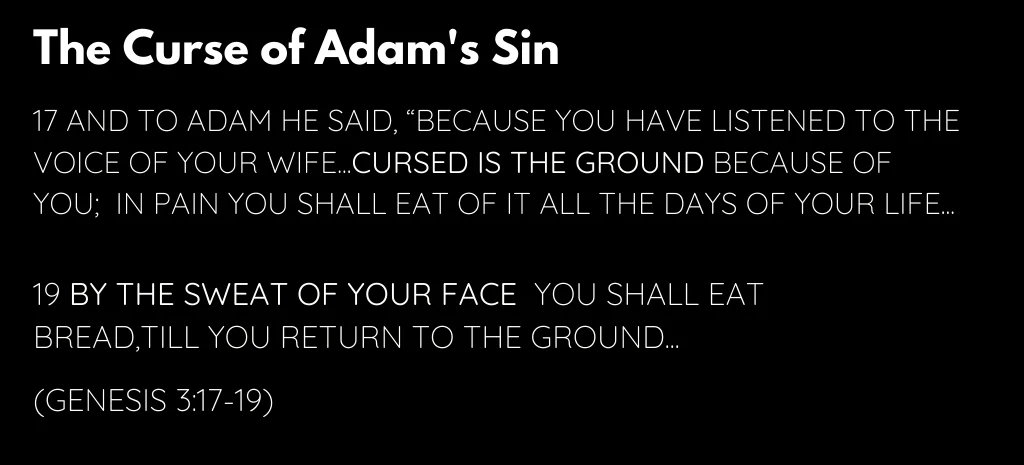
Because of Adam’s sin, death passed upon all: “Therefore, just as through one man sin entered into the world, and death through sin, and so death spread to all mankind, because all sinned—” (Romans 5:12 NASB).
Without the true gospel, people remain condemned, unable to escape the power of sin or enter God’s kingdom. A gospel that adds anything to faith in Christ’s finished work leaves people trusting partly in themselves—still under the curse (“For all who are of works of the Law are under a curse” Galatians 3:10 NASB).
True salvation delivers from this curse: “So then, as through one offence the result was condemnation to all mankind, so also through one act of righteousness the result was justification of life to all mankind. For as through the one man’s disobedience the many were made sinners, so also through the obedience of the One the many will be made righteous” (Romans 5:18-19 NASB). This comes only through believing, not through adding human efforts or rites.
Warning: Leaving Out Sin, Repentance, and Hell Produces a False Gospel

A gospel message that omits the reality of sin, the need for repentance, and the danger of hell is itself a false gospel. Jesus and the Apostles never preached a gospel that ignored these truths.
Jesus warned repeatedly of hell (e.g., Matthew 10:28 NASB: “Do not fear those who kill the body but are unable to kill the soul; but rather fear Him who is able to destroy both soul and body in hell”). Paul preached “repentance toward God and faith in our Lord Jesus Christ” (Acts 20:21 NASB). A message that presents salvation as merely a better life, emotional comfort, or acceptance without confronting sin and its consequences leaves the hearer in their sin—still dead, still condemned, still headed for eternal judgment. Such a truncated gospel cannot save; it produces false assurance and leaves people unchanged and unsaved.
Conclusion: The Call to the Pure Apostolic Gospel
The most important point is this: Any gospel other than the one Jesus and His Apostles taught is a false gospel. It cannot save. It produces false converts and a counterfeit Christian church.
The Armenian Apostolic, Roman Catholic, Eastern Orthodox, and any other teaching that adds sacraments, works, or human cooperation to Christ’s finished work on the cross and His resurrection falls under Paul’s anathema.
Here is the true apostolic gospel message, straight from Scripture:
You need to be saved because you are a sinner under the just wrath of a holy God, and the penalty for sin is eternal death in hell. “For the wages of sin is death” (Romans 6:23 NASB), and “the soul who sins will die” (Ezekiel 18:4 NASB). Hell is real—a place of eternal punishment and separation from God for those who die in their sins (Matthew 25:46 NASB: “These will go away into eternal punishment, but the righteous into eternal life”; Revelation 20:15 NASB: “And if anyone’s name was not found written in the book of life, he was thrown into the lake of fire”).
We are not sinners because we commit certain sins; our sins simply reveal that we were already sinners by nature. It was Adam’s sin that brought condemnation and death to the entire human race (Romans 5:12 NASB: “Therefore, just as through one man sin entered into the world, and death through sin, and so death spread to all mankind, because all sinned—”). Every person is born spiritually dead in sin, under God’s righteous judgment.
Repentance is not a list of sins to stop committing or a promise to clean up your life first. Repentance is a change of mind—a turning from self-reliance and unbelief to trust in Christ alone. It is recognizing your hopeless condition as a sinner deserving God’s wrath and turning to God for mercy through Jesus.
Grace means God’s unmerited, undeserved favor. You cannot earn it; you do not deserve it. Yet God, in His love, sent His Son to die in your place.
The good news is that faith in the finished work of Christ at Calvary—His death on the cross where He bore your sins, paid the full penalty of God’s wrath, and His resurrection proving victory over sin and death—saves a sinner forever. “For by grace you have been saved through faith; and this is not of yourselves, it is the gift of God; not a result of works, so that no one may boast” (Ephesians 2:8-9 NASB). “Believe in the Lord Jesus, and you will be saved” (Acts 16:31 NASB).
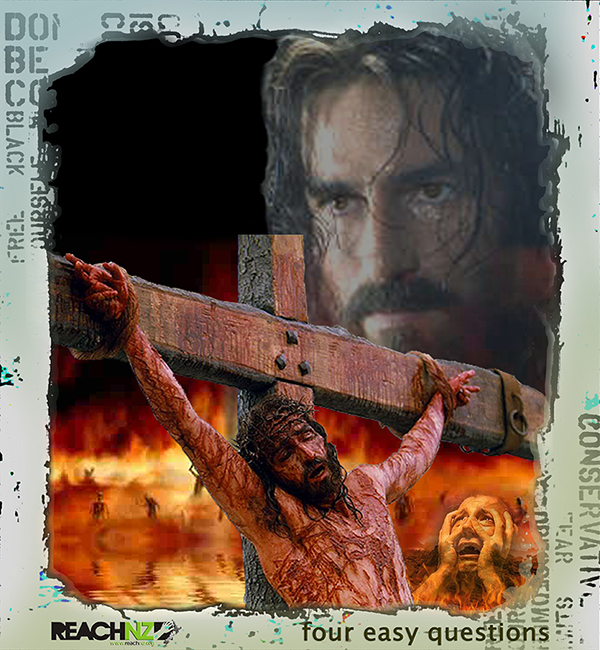
Jesus Christ died for your sins, was buried, and rose again on the third day (1 Corinthians 15:3-4 NASB).
Right now, as a sinner, you are called to repent—turn from trusting in yourself or anything else, and believe the gospel.
Believe in your heart that God raised Jesus from the dead, confess with your mouth that Jesus is Lord, and you will be saved forever (Romans 10:9-10 NASB: “that if you confess with your mouth Jesus as Lord, and believe in your heart that God raised Him from the dead, you will be saved; for with the heart a person believes, resulting in righteousness, and with the mouth he confesses, resulting in salvation”).
When you do this, you will receive the Holy Spirit immediately as a seal and guarantee of your salvation (Ephesians 1:13-14 NASB: “In Him, you also, after listening to the message of truth, the gospel of your salvation—having also believed, you were sealed in Him with the Holy Spirit of promise, who is given as a pledge of our inheritance”). The Holy Spirit will dwell in you, enabling you to hear God’s (Jesus’) voice through His Word, guiding you, convicting you of truth, and leading you to follow Him (John 10:27 NASB: “My sheep hear My voice, and I know them, and they follow Me”). Jesus promises: “My sheep hear My voice, and I know them, and they follow Me; and I give eternal life to them, and they will never perish; and no one will snatch them out of My hand” (John 10:27-28 NASB). He also says, “I will never desert you, nor will I ever forsake you” (Hebrews 13:5 NASB). This means once you are truly saved by faith in Christ alone, you are eternally secure—He will hold you, keep you, and never let you go. You will never perish; you have eternal life right now, and nothing can separate you from His love (Romans 8:38-39 NASB).
Trust Him alone today—repent, believe the gospel, rest in His completed work—and you will be forgiven, justified, born again, indwelt by the Holy Spirit, and delivered from the wrath to come. Your sins will be removed, and you will receive eternal life as God’s free gift.
Believe on the Lord Jesus Christ today—and you will be saved forever. Nothing more. Nothing less. Anything else is another gospel, and Paul has already pronounced the verdict.
Contact Us

If you have any questions or would like more information, please complete our Contact Form. Copy and paste the name of this blog, The True Apostolic Gospel, then add your message
Reach NZ is committed to equipping Kiwis to share this hope through evangelism. Explore our resources (see category list) and join us in reaching New Zealand with the gospel.
In Christ’s love,
The Reach NZ Ministry Team
www.reachnz.org