What a New Testament Church Service Should Look Like
Important Clarification Up Front
This teaching is not about “church buildings vs. house churches,” nor is it saying that meeting in a dedicated building is wrong. Our modern cities, cultures, housing, and architecture are completely different from the first-century Greco-Roman world. Most of today’s homes simply cannot accommodate 70–150 people the way a wealthy believer’s courtyard-style domus could. The point has never been the location or the building. The point is the biblical pattern of how we gather: every-member participation under the headship of Jesus, for the equipping of the saints and the building up of the body in love (Eph 4:12–16). Whether that happens today in a school hall, warehouse, cathedral, large home, or any other space is secondary. The most important reason to gather together was to give the priesthoodship of every believer an opertunity to operate for the building up of the body of Christ.
What a 1st-Century Church Gathering Actually Looked Like
Most New Testament churches met in the spacious, walled urban homes (domus) of wealthier believers—compounds built around an open courtyard (atrium) that could seat 60–100 or more. The whole church in a city (or the great majority of it) gathered in one place on the Lord’s Day. Slaves sat beside merchants, women beside men, Jews beside Gentiles—all one in Christ.
There was no stage, no pulpit, no sound system, no worship team on microphones (not because these things are prohibited, but simply because they did not exist). When the meeting began, the Holy Spirit Himself led the gathering.
One brother stood and taught from the Scriptures. A sister shared a psalm the Lord gave her during the week. Someone spoke in a tongue; another immediately interpreted. A young man brought a revelation received in prayer. An older woman exhorted from what she saw God do in the marketplace. Someone began a hymn and the whole courtyard joined. Prophecies were given, then openly weighed and discussed by the body (1 Cor 14:29). Gifts of healing and miracles flowed—decently and in order, yet with unmistakable life and power.
The Lord’s Supper
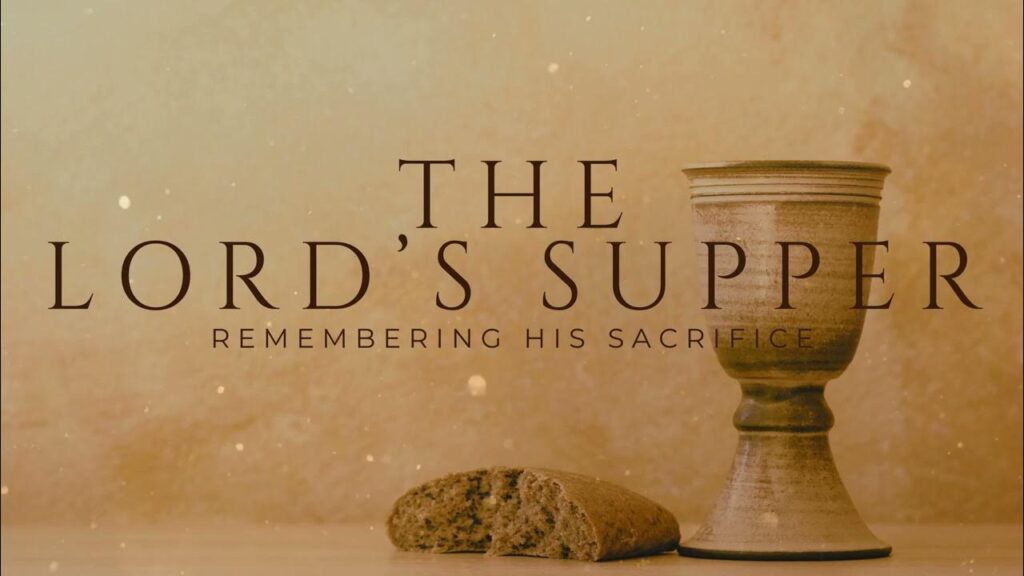
The Lord’s Supper was a real, joyful shared meal eaten together with thanksgiving, testimony, and remembrance of Jesus.
This is the pattern Paul describes in 1 Corinthians 14:26:
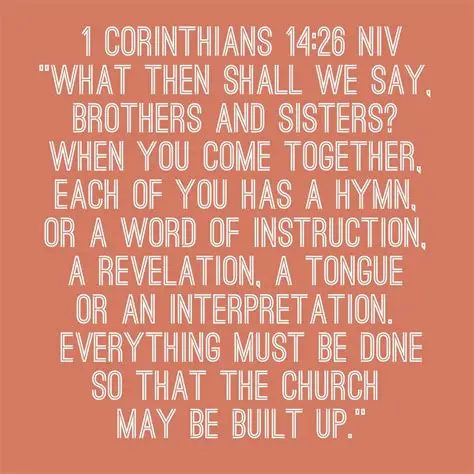
“What is the outcome then, brothers and sisters? When you assemble, each one has a psalm, has a teaching, has a revelation, has a tongue, has an interpretation. Let all things be done for edification.”
Notice: “each one has…” (perfect tense—they already possess it when they arrive). Throughout the week every believer had been seeking the Lord, asking, “What do You want to say or do through me when we gather?” They came prepared, having tested and carried what the Spirit gave them, ready to release it for the common good.
The Priesthood of All Believers
Every believer is a priest (1 Pet 2:5, 9; Rev 1:6). The veil is torn. No clergy/laity divide exists in the New Testament. To each one is given the manifestation of the Spirit for the common good (1 Cor 12:7).
The gathering is never a performance by one man while the royal priesthood sits passively. It is a family meal where every priest brings something to the table.
What a New Testament Church Service Should Look Like Today
(The biblical principles that must shape our gatherings—wherever we meet)
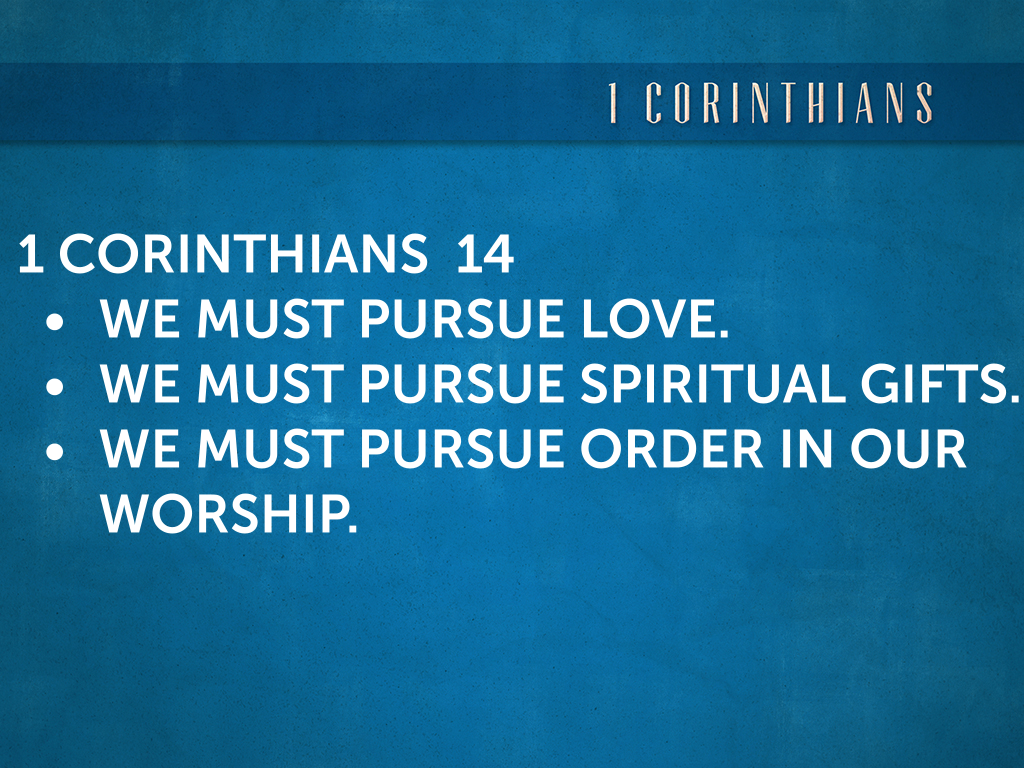
- Every believer comes filled and prepared to minister. Having sought the Lord all week: “What do You want to say or do through me when we assemble?”
- All the ministry gifts of 1 Corinthians 14:26 are welcomed and expected. Each one has a psalm, a teaching, a revelation, a tongue, an interpretation—all for edification.
- Tongues and interpretation follow biblical order. “If anyone speaks in a tongue, it shall be by two or at the most three, and each in turn, and one must interpret; but if there is no interpreter, he must keep silent…” (1 Cor 14:27-28).
- Prophecy and revelation follow biblical order and corporate discernment. “Let two or three prophets speak, and let the others pass judgment… For you can all prophesy one by one, so that all may learn and all may be exhorted… for God is not a God of confusion but of peace” (1 Cor 14:29-33).
- All gifts of the Spirit operate freely yet decently and in order. Words of knowledge, healing, miracles, discernment—never quenched, always tested (1 Cor 12:7-11; 14:39-40; 1 Thess 5:19-21).
- Prayer for the sick with anointing and laying on of hands is normal when the church is assembled. “Is anyone among you sick? Then he must call for the elders of the church, and they are to pray over him, anointing him with oil in the name of the Lord; and the prayer of faith will restore the one who is sick…” (James 5:14-15; cf. Mark 16:18; Acts 28:8).
- Laying on of hands and prophetic presbytery for commissioning and impartation. “Do not neglect the gift that is in you, which was given to you by prophecy with the laying on of hands of the eldership” (1 Tim 4:14; Acts 13:1-3; 2 Tim 1:6).
- Public reading of Scripture, exhortation, and teaching. “Until I come, give attention to the public reading of Scripture, to exhortation, and to teaching” (1 Tim 4:13).
- Corporate collections for the poor and for ministry support. “On the first day of every week, each of you is to put aside and save…” (1 Cor 16:2; Acts 4:34-35; 2 Cor 8–9).
- Plural eldership provides loving oversight, not monopolised ministry. Elders equip the saints for the work of ministry; they do not do it all themselves (Eph 4:11-12; 1 Pet 5:1-4).
- The fivefold ministry is restored and functioning. Apostles, prophets, evangelists, pastors, and teachers—until we all reach unity and maturity (Eph 4:11-13).
- The Lord’s Supper is a real fellowship meal. Shared with joy, testimony, and remembrance (Acts 2:42, 46; 1 Cor 11:20-33).
- Singing is mutual ministry. Speaking to one another in psalms, hymns, and spiritual songs (Eph 5:19; Col 3:16).
Love governs everything
All is done decently, in order, with humility and preference for one another (1 Cor 13–14).
This is how the body grows: “the whole body, joined and held together by every supporting ligament, grows and builds itself up in love, as each part does its work” (Eph 4:16).
Why Cessationism Never Existed in the 1st-Century Church
(and How It Has Robbed the Modern Church — Even Much of the Pentecostal/Charismatic Church — of the New Testament Pattern)
Imagine walking into a church meeting in Corinth in AD 55.
Tongues and interpretation, prophecies being weighed by the congregation, spontaneous psalms and teachings from ordinary believers, prayers for the sick with anointing oil, and the whole church eating the Lord’s Supper together as a real meal.
That was normal. That was expected. That was the Holy Spirit’s design.
Now look at most church services today — even many Pentecostal and charismatic ones — and you see something radically different: one man (or a small leadership team) on a platform, lights, fog, a professional worship band, 45 minutes of music followed by a monologue, and maybe a few minutes of “ministry time” at the end if there’s time. The congregation remains largely passive.
How did we get here?
The root cause is the same doctrine that never existed in the 1st-century church: cessationism — the belief that the miraculous gifts and certain offices ceased after the apostles or the completion of the canon.
1. 1 Corinthians 14 – The Gifts Were Never Meant to Stop
Paul writes to a messy, gifted, charismatic church and gives detailed instructions on how to handle tongues, prophecy, and revelation in the gathering. He never once hints that this is temporary. Instead he says:
- “When you come together, each one has a hymn, a lesson, a revelation, a tongue, or an interpretation.” (v. 26)
- “You can all prophesy one by one…” (v. 31)
- “Do not forbid speaking in tongues… earnestly desire to prophesy.” (v. 39)
If the gifts were about to vanish in a generation, why spend an entire chapter regulating something that would soon be irrelevant?
2. Ephesians 4:11–13 – The Fivefold Ministry Continues “Until…”
Christ gave apostles, prophets, evangelists, pastors, and teachers until we all attain
- unity of the faith,
- the knowledge of the Son of God,
- mature manhood,
- the measure of the stature of the fullness of Christ.
We are obviously not there yet. Therefore, by the clear wording of Scripture, these ministries and the miraculous equipping gifts that accompany them are still active today.
Cessationism: The Silent Infection That Reaches Even Pentecostals
Here is the tragic irony: even though classical Pentecostalism and the charismatic renewal officially rejected cessationism in the 20th century, the spirit and structures of cessationism have quietly crept back in and reshaped most of our churches — including many Spirit-filled ones.
Why Cessationism Never Existed in the 1st-Century Church
(and How It Has Kept the Church Weak, Divided, Ill-Equipped, and Immature)
Imagine walking into a church meeting in Corinth in AD 55.
Tongues and interpretation, prophecies being weighed by the congregation, spontaneous psalms and teachings from ordinary believers, prayers for the sick with anointing oil, and the whole church eating the Lord’s Supper together as a real meal.
That was normal. That was expected. That was the Holy Spirit’s design.
Now look at most church services today—even many Pentecostal and charismatic ones—and you see something radically different: one man (or a small leadership team) on a platform, lights, fog, a professional worship band, 45 minutes of music followed by a monologue, and maybe a few minutes of “ministry time” at the end. The congregation remains largely passive.
How did we get here?
The root cause is a doctrine that never existed in the 1st-century church: cessationism — the belief that the miraculous gifts and certain offices ceased after the apostles or the completion of the canon.
1. 1 Corinthians 14 – The Gifts Were Never Meant to Stop
Paul never hints that the gifts are temporary. He regulates them because they are permanent:
- “When you come together, each one has a hymn, a lesson, a revelation, a tongue, or an interpretation.” (v. 26)
- “You can all prophesy one by one…” (v. 31)
- “Do not forbid speaking in tongues… earnestly desire to prophesy.” (v. 39)
If the gifts were about to vanish, why regulate something that would soon be irrelevant?
2. Ephesians 4:11–13 – The Fivefold Ministry Continues “Until…”
Christ gave apostles, prophets, evangelists, pastors, and teachers until we all attain
- unity of the faith
- the knowledge of the Son of God
- mature manhood
- the measure of the stature of the fullness of Christ.
We are nowhere near that goal. Therefore, these ministries and the equipping gifts that flow through them are still needed to operate in the modern Church.
Cessationism’s Devastating Consequences
By removing apostles and prophets and functionally silencing most of the gifts for centuries, cessationism (and its lingering influence) has produced exactly the opposite of what Jesus intended:
- Weak – The church lost the demonstration of the Spirit and of power (1 Cor 2:4; 4:20). Signs, wonders, healings, and deliverances became rare instead of normal.
- Divided – Without the foundational ministries of apostles and prophets (Eph 2:20), the church splintered into thousands of denominations and independent kingdoms.
- Ill-equipped – Pastors and teachers were left to do nearly all the ministry while the saints were trained to be passive spectators instead of active ministers (Eph 4:12).
- Immature – The body never grew up. Believers remained spiritual infants, dependent on one man’s gift instead of every joint supplying (Eph 4:16). Discernment atrophied. Love grew cold. The stature of Christ was never attained.
This is the very condition Ephesians 4:14 warns against: “tossed here and there by waves and carried about by every wind of doctrine.” Cessationism created the perfect environment for deception, because the equipping ministries and maturing gifts designed to protect and grow the church were declared “no longer necessary.”
The Silent Infection That Reaches Even Pentecostals
Even when the 20th-century Pentecostal/charismatic renewal rejected cessationism in theory, the structures and mindset of cessationism remained. Most churches simply took the old one-man, clergy-dominated, spectator model and added charismatic elements on top—or swung to the opposite extreme of uncontrolled chaos. Neither extreme obeys 1 Corinthians 14’s “each one ministers, everything is weighed, all is done in order” pattern.
The Good News
- The Holy Spirit has not changed.
- The gifts have not been withdrawn.
- The biblical pattern has not been revoked.
Jesus is still giving apostles, prophets, and the full range of gifts until His body reaches unity and maturity. The only thing standing in the way is our unwillingness to repent of centuries of tradition and return to the apostles’ doctrine on how the church is supposed to function when it gathers.
Until we do, we will remain weak, divided, ill-equipped, and immature—exactly the opposite of what Christ died to produce.
But when we dare to believe and obey Ephesians 4 and 1 Corinthians 14 again, the church will once more walk in power, unity, and the full stature of Christ.
The gifts will never cease until the job is finished.
Let’s stop acting as if they already have.
A Loving Plea to Pastors and Leaders
Beloved shepherds, many of you long for this but have never seen it modelled. The Lord is asking you to lay down the celebrity model and courageously release the saints. Begin small. Teach 1 Corinthians 12–14 line by line. Train the church to seek the Lord all week and come ready to share. Create space. Trust the Holy Spirit to lead through His many-membered body.
A Loving Plea to Every Believer
Do not sit another year as a spectator—no matter where the chairs are arranged. You are a priest carrying the same Spirit who raised Jesus. Seek the Lord faithfully through the week. Come filled. Come prepared. Come humble. Come expecting Jesus to manifest Himself through every brother and sister.
When we dare to gather this way again—wherever we gather—the world will once again see that Jesus is alive, because His church is alive with the very life of heaven.
- Let us repent where we have quenched the Spirit.
- Let us return to the pattern of Scripture.
- Let us rebuild on the apostolic foundation—not on the location, but on the functioning of every member.
Come, Holy Spirit. Restore Your church to Your original design.
In the mighty name of Jesus Christ, Amen.
Contact Us
If you have any questions or would like more information, please complete our Contact Form. Add the name of this blog, A Call Back to the Pentecost Pattern, then add your message